



dwade
-
Posts
45 -
Joined
-
Last visited
Content Type
Profiles
News
Minnesota Twins Videos
2026 Minnesota Twins Top Prospects Ranking
2022 Minnesota Twins Draft Picks
Minnesota Twins Free Agent & Trade Rumors, Notes, & Tidbits
Guides & Resources
2023 Minnesota Twins Draft Picks
The Minnesota Twins Players Project
2024 Minnesota Twins Draft Picks
2025 Minnesota Twins Draft Pick Tracker
2026 Minnesota Twins Draft Tracker: Picks & Bonuses
Forums
Blogs
Events
Store
Downloads
Gallery
Everything posted by dwade
-
It wasn’t supposed to start like this; it wasn’t even supposed to be close. Even the most pessimistic Twins fan wouldn’t have seen three straight sweeps to start the season coming. 4-5? Sure. 2-7? Maybe. 0-9 as of Friday morning? Only if Miguel Sano, Brian Dozier, Joe Mauer, Trevor Plouffe, and Ervin Santana all joined a doomsday cult and disappeared into a Central American jungle. And yet, even without a cult-related roster issue, here we are. Image courtesy of Denny Medley-USA TODAY Sports It wasn’t supposed to start like this; it wasn’t even supposed to be close. Even the most pessimistic Twins fan wouldn’t have seen three straight sweeps to start the season coming. 4-5? Sure. 2-7? Maybe. 0-9 as of Friday morning? Only if Miguel Sano, Brian Dozier, Joe Mauer, Trevor Plouffe, and Ervin Santana all joined a doomsday cult and disappeared into a Central American jungle. And yet, even without a cult-related roster issue, here we are. When a team is 0-9, the list of things that are going well is obviously going to be far shorter than the list of things going wrong, but pointing fingers doesn’t do much good. Any one player’s struggles would be masked if his teammates weren’t also struggling. So the question is, absent sweeping systemic changes -- Mauer leads off! DH for Byron Buxton and let the pitchers hit! -- is there a team-wide change that could help jump start the team? Short answer: No. No silver bullet exists for an entire lineup. Fin Ok, fine, it won’t help everyone, but there is one thing that may help a few of the Twins’ hitters to get going, which may be enough to push an extra run or two across and steal them a win. It’s absolutely worth noting that, while these numbers accurately reflect what has happened so far and match up reasonably well with historical trends, we’re still 2-3 weeks from getting anything even remotely resembling stable data. That said, there’s enough smoke here to believe there may be fire, too. One of the things that Sano drew quite a bit of praise for last season, and Byung-Ho Park showed this spring, was their patience. Both sluggers are willing to wait for the best possible pitch to drive, even if it means watching a few hittable pitches go by, and they’re certainly not the only Twins to adopt that philosophy. If doing so leads to more walks or better pitches to hit later in plate appearances, then so much the better, but as evidenced by the fact that the Twins have the fourth most strikeouts in baseball and have produced the fewest runs, a change in mentality may help break the team’s offensive funk. The most patient hitter in the majors leagues so far in 2016 is the A’s Marcus Semien, who is seeing 4.88 pitches per plate appearance (P/PA). That will likely come down a bit as the top marks from 2013-2015 were 4.59, 4.45, and 4.37 respectively. Seeing four or more pitches per plate appearance is not necessarily rare, but it’s hard to argue that a player who does it lacks discipline. Right now, of the Twins’ regulars, Buxton and Park fall into that category with Sano just missing. (Oswaldo Arcia has actually seen the most P/PA on the team at 6.00, but in just four PAs, so he doesn’t really qualify. Impressive nonetheless, though.) Park is clearly still learning the league, which makes it hard to gauge exactly what is going on with his approach. He’s seeing fewer off-speed and breaking pitches than many expected, but he isn’t performing worse against them than he is against the fastballs he has been thrown. This is good in the sense that he doesn’t have an easily identifiable weakness teams can exploit, but since he isn’t hitting anything -- hard or soft -- it’s hard to say whether he’s hitting off-speed and breaking pitches as well as he’s hitting fastballs or faring just as badly against fastballs as he is against more challenging pitches. Much like Jung-Ho Kang’s struggles in the first half of last year, Park’s early season issues should come as little surprise given his unfamiliarity with the league, and it seems reasonable to expect that he’ll come around as he starts seeing pitchers for the second and third time. However, there is one sign of passivity that is worrisome. http://i.imgur.com/0xDhhlo.png As you can see from this heat map from Brooksbaseball.net, Park is getting hittable pitches but isn’t striking at them, particularly early in counts. With two strikes, pitchers are pounding him low and out of the zone, but with 0 or 1 strike, they seem perfectly willing to challenge him in the middle third of the strike zone. He’s going to have to show that he’s capable of punishing mistakes over the plate if he’s going to command any respect from pitchers. Until he does that, they have little reason not to get strike one over the heart of the plate, then aim low and away until they catch a corner or an edge. Buxton is a fundamentally different hitter than the others, but it’s worth looking into his approach, too, since the Twins dream of a day when he can lead off instead of praying he’ll be able to turn the lineup over. Unlike Sano and Eddie Rosario, who seem to have regressed significantly since last season, Buxton doesn’t look all that different: He still looks overmatched at the plate, though a deeper dive into the numbers would show regression from his brief 2015 stint as well. As is often the case with hitters who don’t have a ton of power, pitchers have been challenging Buxton in the strike zone. He’s seeing a nominally above-average number of pitches in the zone (48.6 percent for Buxton compared to an average of 47.1 percent) and pitchers aren’t shy about using their fastballs against him. Buxton swings at a below-average amount of pitches, but his percentages are skewed: He swings at a well above-average amount of pitches outside the zone (35.7 percent compared to a league average of 29.2 percent) and a well below-average amount of pitches inside it (61.5 percent compared to a league average of 65.9 percent), which leaves him with a contact rate almost 9 percent below league average and almost none of it is classified as hard contact. Of Buxton’s 24 plate appearances so far, he has gotten ahead 1-0 just eight times and fallen behind 0-1 the other 16 times. Going back to last season, Buxton has put the first pitch in play just 12 times in 163 plate appearances; pitchers know that they can get ahead with a first-pitch strike, then nibble until Buxton gets himself out by swinging at a pitch out of the zone. Obviously “swing at fewer pitches out of the strike zone” is great advice for any hitter at any level, albeit not really useful, but getting aggressive against first-pitch strikes may keep Buxton from seeing so many pitches he can’t decide which ones to attack and which ones to let pass. Buxton could have seen first-hand the benefits of some early count aggression as Sano ambushed more than a few pitchers last season, hitting .700/.714/1.650 the 21 times he put the first pitch in play. If he had picked up right where he left off last season and were hitting the cover off the ball, Sano’s modified approach would look like maturity; given the fact that he’s still searching for his first extra-base hit, it looks a bit more like passivity. Sano is swinging at fewer pitches overall (37.4 percent of pitches he sees compared to 40.2 percent last season) and the good news is that most of that growth is coming from a six percentage point drop in swings at pitches out of the strike zone (18.5 percent this year, down from 25.8 percent last year). The downside is that when he IS swinging, he’s making less contact. Drawing a lot of walks is essential for a hitter who strikes out a lot and is expected to produce most of his value via the home run, but Sano isn’t capitalizing when he’s ahead in the count by punishing pitchers forced to put the ball in the strike zone. Whether it’s looking for too perfect a pitch or if he’s getting fooled, Sano is using his eye to put pitchers in a precarious spot, then letting them get back into the count and work the corners when they regain their margin. He needn’t adopt Mauer’s plate approach, but If Sano starts putting 0-0, 1-1, and 0-1 pitches into play the way he did last season, he’s liable to see more driveable pitches on 1-0, 2-1, and 3-2 counts. Sano has proven that he has the eye to take a walk when it’s given to him, what he needs to show now is that walking him is by far the safest course of action. For inexperienced hitters, which Park, Buxton, and Sano all are in one sense or another, there are underlying issues like strike zone judgment and comfort with opposing pitchers that can make being aggressive early in counts more difficult or undesirable. However, since their outcomes can’t get much worse and the current process isn’t even producing the building blocks of success, it may be time to simplify the plan at the plate to “See ball, hit ball” since heaven knows all three of them have shown themselves to be supremely capable of doing so. Once the pressure is off and the team has a few wins under its belt, perhaps it will make sense for Park and Sano to go back to making opposing pitchers labor during their plate appearances, but even a tired pitcher isn’t useful if no one is making him pay for his mistakes. View full article
-
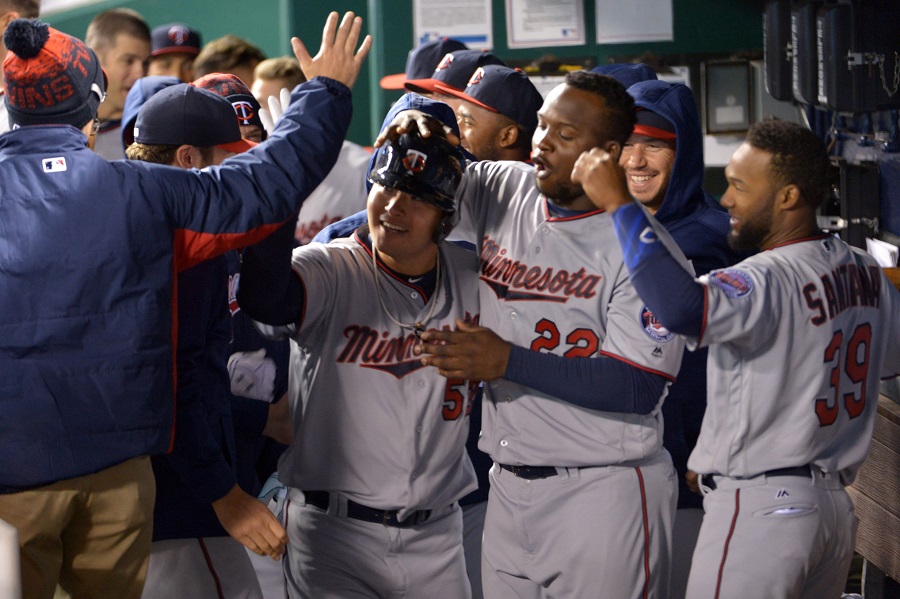 When a team is 0-9, the list of things that are going well is obviously going to be far shorter than the list of things going wrong, but pointing fingers doesn’t do much good. Any one player’s struggles would be masked if his teammates weren’t also struggling. So the question is, absent sweeping systemic changes -- Mauer leads off! DH for Byron Buxton and let the pitchers hit! -- is there a team-wide change that could help jump start the team? Short answer: No. No silver bullet exists for an entire lineup. Fin Ok, fine, it won’t help everyone, but there is one thing that may help a few of the Twins’ hitters to get going, which may be enough to push an extra run or two across and steal them a win. It’s absolutely worth noting that, while these numbers accurately reflect what has happened so far and match up reasonably well with historical trends, we’re still 2-3 weeks from getting anything even remotely resembling stable data. That said, there’s enough smoke here to believe there may be fire, too. One of the things that Sano drew quite a bit of praise for last season, and Byung-Ho Park showed this spring, was their patience. Both sluggers are willing to wait for the best possible pitch to drive, even if it means watching a few hittable pitches go by, and they’re certainly not the only Twins to adopt that philosophy. If doing so leads to more walks or better pitches to hit later in plate appearances, then so much the better, but as evidenced by the fact that the Twins have the fourth most strikeouts in baseball and have produced the fewest runs, a change in mentality may help break the team’s offensive funk. The most patient hitter in the majors leagues so far in 2016 is the A’s Marcus Semien, who is seeing 4.88 pitches per plate appearance (P/PA). That will likely come down a bit as the top marks from 2013-2015 were 4.59, 4.45, and 4.37 respectively. Seeing four or more pitches per plate appearance is not necessarily rare, but it’s hard to argue that a player who does it lacks discipline. Right now, of the Twins’ regulars, Buxton and Park fall into that category with Sano just missing. (Oswaldo Arcia has actually seen the most P/PA on the team at 6.00, but in just four PAs, so he doesn’t really qualify. Impressive nonetheless, though.) Park is clearly still learning the league, which makes it hard to gauge exactly what is going on with his approach. He’s seeing fewer off-speed and breaking pitches than many expected, but he isn’t performing worse against them than he is against the fastballs he has been thrown. This is good in the sense that he doesn’t have an easily identifiable weakness teams can exploit, but since he isn’t hitting anything -- hard or soft -- it’s hard to say whether he’s hitting off-speed and breaking pitches as well as he’s hitting fastballs or faring just as badly against fastballs as he is against more challenging pitches. Much like Jung-Ho Kang’s struggles in the first half of last year, Park’s early season issues should come as little surprise given his unfamiliarity with the league, and it seems reasonable to expect that he’ll come around as he starts seeing pitchers for the second and third time. However, there is one sign of passivity that is worrisome. http://i.imgur.com/0xDhhlo.png As you can see from this heat map from Brooksbaseball.net, Park is getting hittable pitches but isn’t striking at them, particularly early in counts. With two strikes, pitchers are pounding him low and out of the zone, but with 0 or 1 strike, they seem perfectly willing to challenge him in the middle third of the strike zone. He’s going to have to show that he’s capable of punishing mistakes over the plate if he’s going to command any respect from pitchers. Until he does that, they have little reason not to get strike one over the heart of the plate, then aim low and away until they catch a corner or an edge. Buxton is a fundamentally different hitter than the others, but it’s worth looking into his approach, too, since the Twins dream of a day when he can lead off instead of praying he’ll be able to turn the lineup over. Unlike Sano and Eddie Rosario, who seem to have regressed significantly since last season, Buxton doesn’t look all that different: He still looks overmatched at the plate, though a deeper dive into the numbers would show regression from his brief 2015 stint as well. As is often the case with hitters who don’t have a ton of power, pitchers have been challenging Buxton in the strike zone. He’s seeing a nominally above-average number of pitches in the zone (48.6 percent for Buxton compared to an average of 47.1 percent) and pitchers aren’t shy about using their fastballs against him. Buxton swings at a below-average amount of pitches, but his percentages are skewed: He swings at a well above-average amount of pitches outside the zone (35.7 percent compared to a league average of 29.2 percent) and a well below-average amount of pitches inside it (61.5 percent compared to a league average of 65.9 percent), which leaves him with a contact rate almost 9 percent below league average and almost none of it is classified as hard contact. Of Buxton’s 24 plate appearances so far, he has gotten ahead 1-0 just eight times and fallen behind 0-1 the other 16 times. Going back to last season, Buxton has put the first pitch in play just 12 times in 163 plate appearances; pitchers know that they can get ahead with a first-pitch strike, then nibble until Buxton gets himself out by swinging at a pitch out of the zone. Obviously “swing at fewer pitches out of the strike zone” is great advice for any hitter at any level, albeit not really useful, but getting aggressive against first-pitch strikes may keep Buxton from seeing so many pitches he can’t decide which ones to attack and which ones to let pass. Buxton could have seen first-hand the benefits of some early count aggression as Sano ambushed more than a few pitchers last season, hitting .700/.714/1.650 the 21 times he put the first pitch in play. If he had picked up right where he left off last season and were hitting the cover off the ball, Sano’s modified approach would look like maturity; given the fact that he’s still searching for his first extra-base hit, it looks a bit more like passivity. Sano is swinging at fewer pitches overall (37.4 percent of pitches he sees compared to 40.2 percent last season) and the good news is that most of that growth is coming from a six percentage point drop in swings at pitches out of the strike zone (18.5 percent this year, down from 25.8 percent last year). The downside is that when he IS swinging, he’s making less contact. Drawing a lot of walks is essential for a hitter who strikes out a lot and is expected to produce most of his value via the home run, but Sano isn’t capitalizing when he’s ahead in the count by punishing pitchers forced to put the ball in the strike zone. Whether it’s looking for too perfect a pitch or if he’s getting fooled, Sano is using his eye to put pitchers in a precarious spot, then letting them get back into the count and work the corners when they regain their margin. He needn’t adopt Mauer’s plate approach, but If Sano starts putting 0-0, 1-1, and 0-1 pitches into play the way he did last season, he’s liable to see more driveable pitches on 1-0, 2-1, and 3-2 counts. Sano has proven that he has the eye to take a walk when it’s given to him, what he needs to show now is that walking him is by far the safest course of action. For inexperienced hitters, which Park, Buxton, and Sano all are in one sense or another, there are underlying issues like strike zone judgment and comfort with opposing pitchers that can make being aggressive early in counts more difficult or undesirable. However, since their outcomes can’t get much worse and the current process isn’t even producing the building blocks of success, it may be time to simplify the plan at the plate to “See ball, hit ball” since heaven knows all three of them have shown themselves to be supremely capable of doing so. Once the pressure is off and the team has a few wins under its belt, perhaps it will make sense for Park and Sano to go back to making opposing pitchers labor during their plate appearances, but even a tired pitcher isn’t useful if no one is making him pay for his mistakes.
 -
B-E Aggressive! Twins Hitters Are Letting The World Pass Them By
dwade posted a blog entry in Unkind Bounces
It wasn’t supposed to start like this; it wasn’t even supposed to be close. Even the most pessimistic Twins fan wouldn’t have seen three straight sweeps to start the season coming. 4-5? Sure. 2-7? Maybe. 0-9 as of Friday morning? Only if Miguel Sano, Brian Dozier, Joe Mauer, Trevor Plouffe, and Ervin Santana all joined a doomsday cult and disappeared into a Central American jungle. And yet, even without a cult-related roster issue, here we are. When a team is 0-9, the list of things that are going well is obviously going to be far shorter than the list of things going wrong, but pointing fingers doesn’t do much good. Any one player’s struggles would be masked if his teammates weren’t also struggling. So the question is, absent sweeping systemic changes -- Mauer leads off! DH for Byron Buxton and let the pitchers hit! -- is there a team-wide change that could help jump start the team? Short answer: No. No silver bullet exists for an entire lineup. Fin Ok, fine, it won’t help everyone, but there is one thing that may help a few of the Twins’ hitters to get going, which may be enough to push an extra run or two across and steal them a win. It’s absolutely worth noting that, while these numbers accurately reflect what has happened so far and match up reasonably well with historical trends, we’re still 2-3 weeks from getting anything even remotely resembling stable data. That said, there’s enough smoke here to believe there may be fire, too. One of the things that Sano drew quite a bit of praise for last season, and Byung-Ho Park showed this spring, was their patience. Both sluggers are willing to wait for the best possible pitch to drive, even if it means watching a few hittable pitches go by, and they’re certainly not the only Twins to adopt that philosophy. If doing so leads to more walks or better pitches to hit later in plate appearances, then so much the better, but as evidenced by the fact that the Twins have the fourth most strikeouts in baseball so far and have produced the fewest runs, a change in mentality may help break the team’s offensive funk. The most patient hitter in the majors leagues so far in 2016 is the A’s Marcus Semien, who is seeing 4.88 pitches per plate appearance (P/PA). That will likely come down a bit as the top marks from 2013-2015 were 4.59, 4.45, and 4.37 respectively. Seeing four or more pitches per plate appearance is not necessarily rare, but it’s hard to argue that a player who does it lacks discipline. Right now, of the Twins’ regulars, Buxton and Park fall into that category with Sano just missing. (Oswaldo Arcia has actually seen the most P/PA on the team at 6.00, but in just four PAs, so he doesn’t really qualify. Impressive nonetheless, though.) Park is clearly still learning the league, which makes it hard to gauge exactly what is going on with his approach. He’s seeing fewer offspeed and breaking pitches than many expected, but he isn’t performing worse against them than he is against the fastballs he has been thrown. This is good in the sense that he doesn’t have an easily identifiable weakness teams can exploit, but since he isn’t hitting anything -- hard or soft -- it’s hard to say whether he’s hitting offspeed and breaking pitches as well as he’s hitting fastballs or faring just as badly against fastballs as he is against more challenging pitches. Much like Jung-Ho Kang’s struggles in the first half of last year, Park’s early season issues should come as little surprise given his unfamiliarity with the league, and it seems reasonable to expect that he’ll come around as he starts seeing pitchers for the second and third time. However, there is one sign of passivity that is worrisome. http://i.imgur.com/0xDhhlo.png As you can see from this heat map from Brooksbaseball.net, Park is getting hittable pitches but isn’t striking at them, particularly early in counts. With two strikes, pitchers are pounding him low and out of the zone, but with 0 or 1 strike, they seem perfectly willing to challenge him in the middle third of the strike zone. He’s going to have to show that he’s capable of punishing mistakes over the plate if he’s going to command any respect from pitchers. Until he does that, they have little reason not to get strike one over the heart of the plate, then aim low and away until they catch a corner or an edge. Buxton is a fundamentally different hitter than the others, but it’s worth looking into his approach, too, since the Twins dream of a day when he can lead off instead of praying he’ll be able to turn the lineup over. Unlike Sano and Eddie Rosario, who seem to have regressed significantly since last season, Buxton doesn’t look all that different: He still looks overmatched at the plate, though a deeper dive into the numbers would show regression from his brief 2015 stint as well. As is often the case with hitters who don’t have a ton of power, pitchers have been challenging Buxton in the strike zone. He’s seeing a nominally above-average number of pitches in the zone (48.6 percent for Buxton compared to an average of 47.1 percent) and pitchers aren’t shy about using their fastballs against him. Buxton swings at a below-average amount of pitches, but his percentages are skewed: He swings at a well above-average amount of pitches outside the zone (35.7 percent compared to a league average of 29.2 percent) and a well below-average amount of pitches inside it (61.5 percent compared to a league average of 65.9 percent), which leaves him with a contact rate almost 9 percent below league average and almost none of it is classified as hard contact. Of Buxton’s 24 plate appearances so far, he has gotten ahead 1-0 just eight times and fallen behind 0-1 the other 16 times. Going back to last season, Buxton has put the first pitch in play just 12 times in 163 plate appearances; pitchers know that they can get ahead with a first-pitch strike, then nibble until Buxton gets himself out by swinging at a pitch out of the zone. Obviously “swing at fewer pitches out of the strike zone” is great advice for any hitter at any level, albeit not really useful, but getting aggressive against first-pitch strikes may keep Buxton from seeing so many pitches he can’t decide which ones to attack and which ones to let pass. Buxton could have seen first hand the benefits of some early count aggressive as Sano ambushed more than a few pitchers last season, hitting .700/.714/1.650 the 21 times he put the first pitch in play. If he had picked up right where he left off last season and were hitting the cover off the ball, Sano’s modified approach would look like maturity; given the fact that he’s still searching for his first extra base hit, it looks a bit more like passivity. Sano is swinging at fewer pitches overall (37.4 percent of pitches he sees compared to 40.2 percent last season) and the good news is that most of that growth is coming from a six percentage point drop in swings at pitches out of the strike zone (18.5 percent this year, down from 25.8 percent last year). The downside is that when he IS swinging, he’s making less contact. Drawing a lot of walks is essential for a hitter who strikes out a lot and is expected to produce most of his value via the home run, but Sano isn’t capitalizing when he’s ahead in the count by punishing pitchers forced to put the ball in the strike zone. Whether it’s looking for too perfect a pitch or if he’s getting fooled, Sano is using his eye to put pitchers in a precarious spot, then letting them get back into the count and work the corners when they regain their margin. He needn’t adopt Mauer’s plate approach, but If Sano starts putting 0-0, 1-1, and 0-1 pitches into play the way he did last season, he’s liable to see more drivable pitches on 1-0, 2-1, and 3-2 counts. Sano has proven that he has the eye to take a walk when it’s given to him, what he needs to show now is that walking him is by far the safest course of action. For inexperienced hitters, which Park, Buxton, and Sano all are in one sense or another, there are underlying issues like strike zone judgment and comfort with opposing pitchers that can make being aggressive early in counts more difficult or undesirable. However, since their outcomes can’t get much worse and the current process isn’t even producing the building blocks of success, it may be time to simplify the plan at the plate to “See ball, hit ball” since heaven knows all three of them have shown themselves to be supremely capable of doing so. Once the pressure is off and the team has a few wins under its belt, perhaps it will make sense for Park and Sano to go back to making opposing pitchers labor during their plate appearances, but even a tired pitcher isn’t useful if no one is making him pay for his mistakes. -
The trouble is that none of them has any meaningful outfield experience either. Mauer looked uninspiring the first and last time he was out there, Park was a 1B in Korea, and while Plouffe did take a few reps out there in 2012, he's been on the infield ever since. I don't think any of them are holding out on the team, they're liable to be just as bad as Sano is but older and less likely to develop into a good outfielder. The other thing I think is worth asking is whether Sano would be better at 3B than he is in the outfield. Yes, he definitely has more experience out there, but I don't recall anyone raving about him as a defensive ace, as much as saying "eh, his bat will play there." Long-term, he's either a DH or a 1B.
-
Perhaps no Twin better typified the mid-2000s teams than Nick Punto. The nibbliest of the piranhas, Punto played every defensive position over the course of his career except pitcher and catcher, and played most of them better than the average major leaguer. In fact, he had nearly 4000 chances to make a defensive play, and made just 84 errors. Defensive stats have evolved substantially since Punto came into the league, but they’re all fairly unanimous in showing that Punto was an asset defensively no matter where he played. Image courtesy of Gary A. Vasquez, USA Today Perhaps no Twin better typified the mid-2000s teams than Nick Punto. The nibbliest of the piranhas, Punto played every defensive position over the course of his career except pitcher and catcher, and played most of them better than the average major leaguer. In fact, he had nearly 4000 chances to make a defensive play, and made just 84 errors. Defensive stats have evolved substantially since Punto came into the league, but they’re all fairly unanimous in showing that Punto was an asset defensively no matter where he played. The fact that his inclusion in the lineup on a game in and game out basis was as controversial as it was is a great testament to the fact that he was 1) versatile 2) a strong defender and 3) a virtual waste of a plate appearance. For his career, he was about 23 percent worse than the average major league hitter and that includes his inexplicable, galling 2011 when he was 25 percent above average for the Cardinals after having been 32 percent below average for the 2010 Twins. Perhaps no season serves as a better example of the Punto paradox than 2007, when he was the worst qualified hitter in baseball, but still managed to eke out a positive WAR thanks to his defense and adequate base running. Punto’s glove was too good to leave on the bench, the Twins believed, but putting him in the lineup meant sacrificing elsewhere, which ought to sound very similar to the situation the team is facing this year with Miguel Sano. No one is unclear why the Twins want Sano’s bat in the lineup, not after what he showed in his 335 PAs last year. By wRC+, Sano was one of the 10 best hitters in baseball (min 300 PAs) last season, and if that doesn’t buy someone a guaranteed spot in the order, absolutely nothing will. But the presence of Joe Mauer and Trevor Plouffe, and the acquisition of Byung-Ho Park means that Sano will now be judged by both his offense and his performance in the outfield. The Twins may have hoped Sano would be further along in his development as an outfielder by this point, but there was no way he was going to be anything other than a work in progress for most of 2016. His ill-conceived dive on Tuesday night that cost the Twins a run showed that his instincts are still coming along, but he’s already gotten on base multiple times in one game twice in the three games so far this season, so the yin and yang of 2016 Miguel Sano is already on full display. Much as we wondered how bad Punto’s offense could be before Ron Gardenhire would stop penciling him in the lineup, the question that will almost certainly face Paul Molitor at points his season is how bad can Sano be in the outfield while still providing enough of a reason to keep him in the lineup. In 2009, Adam Dunn turned in the worst defensive season by any outfielder since 2000. He was 44 runs below replacement defensively that year, though he split time between the outfield corners and first base, where he was also execrable. He hit 38 home runs, walked in over 17 percent of his plate appearances, and was 42 percent better than league average on offense to compensate for being an unhidable butcher in the field, and managed to produce a 1.1 WAR that season. Clearly the Nationals were hoping for an overall better result from Dunn in his first year with the team, but it’s hard to argue that they got anything other than what they should have expected. If Sano matches Dunn, he’ll still be an offensive star, but he’ll give the Twins less overall value in 162 games than he did 80 last year. Is that acceptable? It’s certainly not desirable, but will the cumulative effect of having Park, Mauer, and Plouffe in the order along with Sano produce the surplus value the Twins want? Possible, but still suboptimal. There is a pretty clear model for the player the Twins would like Sano to be as long as he’s learning the outfield: Manny Ramirez. Ramirez wasn’t just bad when he was learning his position, he was hilariously terrible in the field for most of his career, and yet, since 2000, Ramirez is one of only two players to have a season where he was worth -25 runs or worse defensively and still post a WAR of 2.9 or higher. He did four times (Hideki Matsui was the only other to do it, and he did it just once) between 2000 and when his career functionally ended in 2009. Ramirez’s 2005 season was the sixth worst defensive player-season of the new millennium at -32.6 runs below replacement, but he hit 45 home runs, was 52 percent above league average offensively, and helped anchor a Red Sox offense that scored an MLB-best 910 runs. 2.9 WAR certainly wasn’t his high water mark, but it was good enough to help the Sox secure a playoff spot. Unlike Dunn -- whose offensive profile more closely matches Sano’s than Ramirez’s does -- Ramirez wasn’t a strictly three true outcomes threat that season, as he hit .292/.388/.594 to help drive up his overall value. If Sano ends up being the next Manny Ramirez, the Twins should be elated even with the accompanying defensive frailties, but betting on that career arc is awfully optimistic. As mentioned above, Sano’s skill set is similar to Dunn’s: Hit for great power, walk a lot based on the fear you instill in opposing pitchers, and strike out an impressively high number of times, which means that in order to produce the type of value the Twins need Sano to produce to be competitive this year -- and, in truth, in the future as well -- he’ll either need to keep his defensive value above -20 runs below replacement or add a high batting average to his offensive arsenal. It wouldn’t surprise me a bit for this to be the worst season of Sano’s career. He ought to get better and better in the outfield as he gets a feel for different parks and as his instincts kick in, which means that even if his offense stagnates (if you can call repeated seasons at 40 percent above average stagnation) his overall value will continue to rise. Living between 10 and 20 runs below replacement would position him in the Ryan Braun or Giancarlo Stanton realm of being far better on offense than on defense, but valuable enough in total to make a serious MVP case in years of exemplary offensive performance. View full article
-
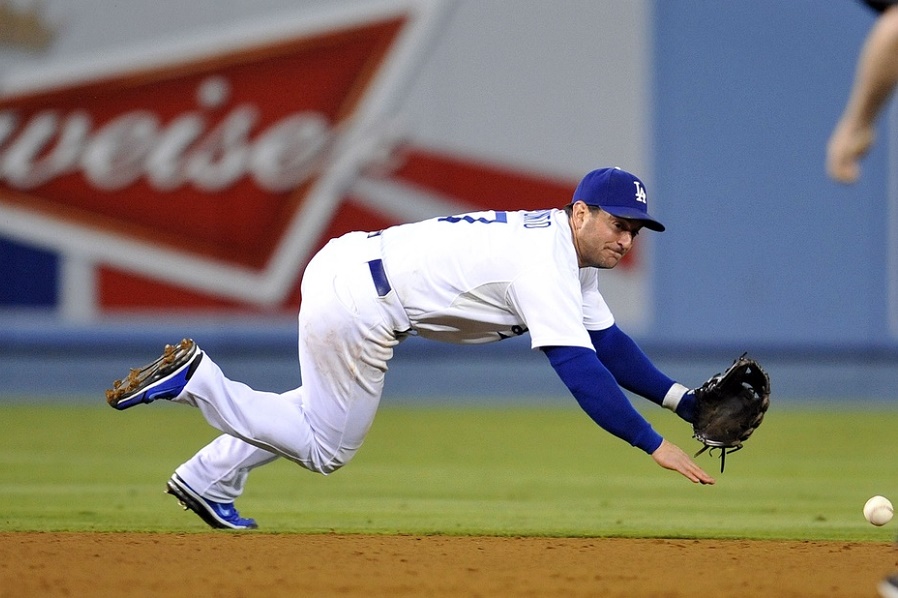 The fact that his inclusion in the lineup on a game in and game out basis was as controversial as it was is a great testament to the fact that he was 1) versatile 2) a strong defender and 3) a virtual waste of a plate appearance. For his career, he was about 23 percent worse than the average major league hitter and that includes his inexplicable, galling 2011 when he was 25 percent above average for the Cardinals after having been 32 percent below average for the 2010 Twins. Perhaps no season serves as a better example of the Punto paradox than 2007, when he was the worst qualified hitter in baseball, but still managed to eke out a positive WAR thanks to his defense and adequate base running. Punto’s glove was too good to leave on the bench, the Twins believed, but putting him in the lineup meant sacrificing elsewhere, which ought to sound very similar to the situation the team is facing this year with Miguel Sano. No one is unclear why the Twins want Sano’s bat in the lineup, not after what he showed in his 335 PAs last year. By wRC+, Sano was one of the 10 best hitters in baseball (min 300 PAs) last season, and if that doesn’t buy someone a guaranteed spot in the order, absolutely nothing will. But the presence of Joe Mauer and Trevor Plouffe, and the acquisition of Byung-Ho Park means that Sano will now be judged by both his offense and his performance in the outfield. The Twins may have hoped Sano would be further along in his development as an outfielder by this point, but there was no way he was going to be anything other than a work in progress for most of 2016. His ill-conceived dive on Tuesday night that cost the Twins a run showed that his instincts are still coming along, but he’s already gotten on base multiple times in one game twice in the three games so far this season, so the yin and yang of 2016 Miguel Sano is already on full display. Much as we wondered how bad Punto’s offense could be before Ron Gardenhire would stop penciling him in the lineup, the question that will almost certainly face Paul Molitor at points his season is how bad can Sano be in the outfield while still providing enough of a reason to keep him in the lineup. In 2009, Adam Dunn turned in the worst defensive season by any outfielder since 2000. He was 44 runs below replacement defensively that year, though he split time between the outfield corners and first base, where he was also execrable. He hit 38 home runs, walked in over 17 percent of his plate appearances, and was 42 percent better than league average on offense to compensate for being an unhidable butcher in the field, and managed to produce a 1.1 WAR that season. Clearly the Nationals were hoping for an overall better result from Dunn in his first year with the team, but it’s hard to argue that they got anything other than what they should have expected. If Sano matches Dunn, he’ll still be an offensive star, but he’ll give the Twins less overall value in 162 games than he did 80 last year. Is that acceptable? It’s certainly not desirable, but will the cumulative effect of having Park, Mauer, and Plouffe in the order along with Sano produce the surplus value the Twins want? Possible, but still suboptimal. There is a pretty clear model for the player the Twins would like Sano to be as long as he’s learning the outfield: Manny Ramirez. Ramirez wasn’t just bad when he was learning his position, he was hilariously terrible in the field for most of his career, and yet, since 2000, Ramirez is one of only two players to have a season where he was worth -25 runs or worse defensively and still post a WAR of 2.9 or higher. He did four times (Hideki Matsui was the only other to do it, and he did it just once) between 2000 and when his career functionally ended in 2009. Ramirez’s 2005 season was the sixth worst defensive player-season of the new millennium at -32.6 runs below replacement, but he hit 45 home runs, was 52 percent above league average offensively, and helped anchor a Red Sox offense that scored an MLB-best 910 runs. 2.9 WAR certainly wasn’t his high water mark, but it was good enough to help the Sox secure a playoff spot. Unlike Dunn -- whose offensive profile more closely matches Sano’s than Ramirez’s does -- Ramirez wasn’t a strictly three true outcomes threat that season, as he hit .292/.388/.594 to help drive up his overall value. If Sano ends up being the next Manny Ramirez, the Twins should be elated even with the accompanying defensive frailties, but betting on that career arc is awfully optimistic. As mentioned above, Sano’s skill set is similar to Dunn’s: Hit for great power, walk a lot based on the fear you instill in opposing pitchers, and strike out an impressively high number of times, which means that in order to produce the type of value the Twins need Sano to produce to be competitive this year -- and, in truth, in the future as well -- he’ll either need to keep his defensive value above -20 runs below replacement or add a high batting average to his offensive arsenal. It wouldn’t surprise me a bit for this to be the worst season of Sano’s career. He ought to get better and better in the outfield as he gets a feel for different parks and as his instincts kick in, which means that even if his offense stagnates (if you can call repeated seasons at 40 percent above average stagnation) his overall value will continue to rise. Living between 10 and 20 runs below replacement would position him in the Ryan Braun or Giancarlo Stanton realm of being far better on offense than on defense, but valuable enough in total to make a serious MVP case in years of exemplary offensive performance.
 -
Nick Punto and Miguel Sano: Getting The Good To Outweigh The Bad
dwade posted a blog entry in Unkind Bounces
Perhaps no Twin better typified the mid-2000s teams than Nick Punto. The nibbliest of the piranhas, Punto played every defensive position over the course of his career except pitcher and catcher, and played most of them better than the average major leaguer. In fact, he had nearly 4000 chances to make a defensive play, and made just 84 errors. Defensive stats have evolved substantially since Punto came into the league, but they’re all fairly unanimous in showing that Punto was a positive asset defensively no matter where he played. The fact that his inclusion in the lineup on a game in and game out basis was as controversial as it was is a great testament to the fact that he was 1) versatile 2) a strong defender and 3) a virtual waste of a plate appearance. For his career, he was about 23 percent worse than the average major league hitter and that includes his inexplicable, galling 2011 when he was 25 above average for the Cardinals after having been 32 percent below average for the 2010 Twins. Perhaps no season serves as a better example of the Punto paradox than 2007, when he was the worst qualified hitter in baseball, but still managed to eek out a positive WAR thanks to his defense and adequate baserunning. Punto’s glove was too good to leave on the bench, the Twins believed, but putting him in the lineup meant sacrificing elsewhere, which ought to sound very similar to the situation the team is facing this year with Miguel Sano. No one is unclear why the Twins want Sano’s bat in the lineup, not after what he showed in his 335 PAs last year. By wRC+, Sano was one of the 10 best hitters in baseball (min 300 PAs) last season, and if that doesn’t buy someone a guaranteed spot in the order, absolutely nothing will. But the presence of Joe Mauer and Trevor Plouffe, and the acquisition of Byung-Ho Park means that Sano will now be judged by both his offense and his performance in the outfield. The Twins may have hoped Sano would be further along in his development as an outfielder by this point, but there was no way he was going to be anything other than a work in progress for most of 2016. His ill-conceived dive on Tuesday night that cost the Twins a run showed that his instincts are still coming along, but he’s already gotten on base multiple times in one game twice in the three games so far this season, so the yin and yang of 2016 Miguel Sano is already on full display. Much as we wondered how bad Punto’s offense could be before Ron Gardenhire would stop penciling him in the lineup, the question that will almost certainly face Paul Molitor at points his season is how bad can Sano be in the outfield while still providing enough of a reason to keep him in the lineup. In 2009, Adam Dunn turned in the worst defensive season by any outfielder since 2000. He was 44 runs below replacement defensively that year, though he split time between the outfield corners and first base, where he was also execrable. He hit 38 home runs, walked in over 17 percent of his plate appearances, and was 42 percent better than league average on offense to compensate for being an unhidable butcher in the field, and managed to produce a 1.1 WAR that season. Clearly the Nationals were hoping for an overall better result from Dunn in his first year with the team, but it’s hard to argue that they got anything other than what they should have expected. If Sano matches Dunn, he’ll still be an offensive star, but he’ll give the Twins less overall value in 162 games than he did 80 last year. Is that acceptable? It’s certainly not desirable, but will the cumulative effect of having Park, Mauer, and Plouffe in the order along with Sano produce the surplus value the Twins want? Possible, but still suboptimal even still. There is a pretty clear model for the player the Twins would like Sano to be as long as he’s learning the outfield: Manny Ramirez. Ramirez wasn’t just bad when he was learning his position, he was hilariously terrible in the field for most of his career, and yet, since 2000, Ramirez is one of only two players to have a season where he was worth -25 runs or worse defensively and still post a WAR of 2.9 or higher. He did four times (Hideki Matsui was the only other to do it, and he did it just once) between 2000 and when his career functionally ended in 2009. Ramirez’s 2005 season was the sixth worst defensive player-season of the new millennium at -32.6 runs below replacement, but he hit 45 home runs, was 52 percent above league average offensively, and helped anchor a Red Sox offense that scored an MLB-best 910 runs. 2.9 WAR certainly wasn’t his high water mark, but it was good enough to help the Sox secure a playoff spot. Unlike Dunn -- whose offensive profile more closely matches Sano’s than Ramirez’s does -- Ramirez wasn’t a strictly three true outcomes threat that season, as he hit .292/.388/.594 to help drive up his overall value. If Sano ends up being the next Manny Ramirez, the Twins should be elated even with the accompanying defensive frailties, but betting on that career arc is awfully optimistic. As mentioned above, Sano’s skill set is similar to Dunn’s: Hit for great power, walk a lot based on the fear you instill in opposing pitchers, and strike out an impressively high number of times, which means that in order to produce the type of value the Twins need Sano to produce to be competitive this year -- and, in truth, in the future as well -- he’ll either need to keep his defensive value above -20 runs below replacement or add a high batting average to his offensive arsenal. It wouldn’t surprise me a bit for this to be the worst season of Sano’s career. He ought to get better and better in the outfield as he gets a feel for different parks and as his instincts kick in, which means that even if his offense stagnates (if you can call repeated seasons at 40 percent above average stagnation) his overall value will continue to rise. Living between 10 and 20 runs below replacement would position him in the Ryan Bruan or Giancarlo Stanton realm of being far better on offense than on defense, but valuable enough in total to make a serious MVP case in years of exemplary offensive performance. -
While they differ in methodology, the major projection systems -- Marcel, OLIVER, PECOTA, Steamer, ZiPS et al. -- all abide by one central rule: Projections are not predictions. This mantra should be a source of comfort to Twins fans, since most experts are willing to predict that the team will be interesting and has at least some chance of making the playoffs they barely missed out on last year. Image courtesy of Bruce Kluckhohn- USAToday-- image of Eduardo Escobar While they differ in methodology, the major projection systems -- Marcel, OLIVER, PECOTA, Steamer, ZiPS et al. -- all abide by one central rule: Projections are not predictions. This mantra should be a source of comfort to Twins fans, since most experts are willing to predict that the team will be interesting and has at least some chance of making the playoffs they barely missed out on last year. The projections, however, are nowhere near as kind. The offense looks to be about league average, while the pitching staff...well, according to the projections released so far, the less said about the pitching staff, the better. Lest these automated soothsayers take away the hope that sustains baseball fans through the winter, there seems to be ample reason for more skepticism than usual this year regarding their estimation of the Twins’ offense. To get a sense of the challenge facing projectors, here’s what I’d pencil in right now for a typical midseason lineup. The number in parenthesis refers to the player’s career plate appearances in major league baseball. CF Byron Buxton (129 PA) 2B Brian Dozier (2374 PA) 1B Joe Mauer (6244 PA) RF Miguel Sano (335 PA) 3B Trevor Plouffe (2565 PA) DH Byung-Ho Park (0 PA) LF Eddie Rosario (474 PA) SS Eduardo Escobar (1243 PA) C John Ryan Murphy (284 PA) Dozier, Plouffe, and Mauer are all relatively easy to project. Since they’ve established the kinds of players they are, it would be more surprising to have one of them either completely fail to even approach their projected line or to completely overshoot it than it would be for all three to end 2016 having performed close to expectations. Escobar doesn’t have quite the longevity the others have, but his last two years (2014: .275/.315/.406 in 465 PA and 2015: .262/.309/.445 in 446 PA) have been so consistent, that he shouldn’t pose much of a problem. Some variation (more OBP, less slugging for example) is certainly possible. His last two months of 2015 were aberrant to be sure, but most projection systems won’t go into that level of granularity, and his year as a whole was right in line with expectations. Thanks to a long, fruitful career in Korea, Park should theoretically be projectable, especially once his past performance is re-evaluated using something like Keith Woolner’s Major League Equivalent tool. However, his season is so fraught with external variables -- things like how he adjusts to major league pitching, how the travel schedule affects him, and how quickly he acclimates to the Twins’ clubhouse culture -- that no formula could predict if he can contribute much this season or if the Twins will need to wait until next year to see Park’s characteristic power in full bloom. That leaves about half the lineup to project. Research done independently at The Hardball Times and Beyond the Box Score show that projection systems tend to struggle with rookies since most -- PECOTA being the most notable outlier -- use some variation of a weighted three-year average in their projections. The remaining five players in that projected lineup (Buxton, Sano, Rosario, and Murphy) combined for just 1222 career plate appearances, which is about as many as one player should have in two full seasons. Adding another level of complexity, Murphy’s came over the course of three seasons, which makes for three minute samples instead of one small one. Having solid minor league numbers to fall back on can help pull the projections in line, but these Twins don’t do the systems even that bit of kindness. They combined for even fewer plate appearances in Triple-A (612) than they did in the majors. Of those, 453 belong to Murphy, who hasn’t appeared in Triple-A since August of 2014, so it isn’t even as though he has a recent sample to pull from. There’s a temptation to see this as a positive: The team won’t project well, but will end up being quite good. That’s possible. It’s equally possible that the projections will be bullish and the youth movement will be a year away from hitting its stride. ZiPS already has Buxton and Sano as two of the team’s three best players, though with lines of .266/.310/.405 and .249/.337/.491 respectively, that speaks more to bearish numbers for the rest of the team than optimism about them. The Twins’ hitters are going to be better than their pitchers, this seems like the consensus view at this point in the offseason, but there just seems to be too much ambiguity to say whether they’ll be good enough to fully compensate for the pitching staff. View full article
-
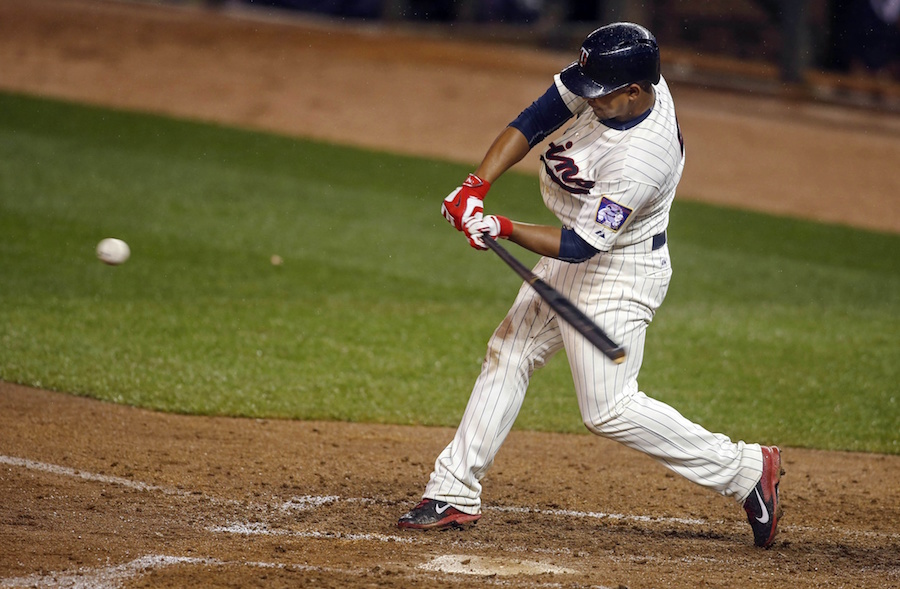 The projections, however, are nowhere near as kind. The offense looks to be about league average, while the pitching staff...well, according to the projections released so far, the less said about the pitching staff, the better. Lest these automated soothsayers take away the hope that sustains baseball fans through the winter, there seems to be ample reason for more skepticism than usual this year regarding their estimation of the Twins’ offense. To get a sense of the challenge facing projectors, here’s what I’d pencil in right now for a typical midseason lineup. The number in parenthesis refers to the player’s career plate appearances in major league baseball. CF Byron Buxton (129 PA) 2B Brian Dozier (2374 PA) 1B Joe Mauer (6244 PA) RF Miguel Sano (335 PA) 3B Trevor Plouffe (2565 PA) DH Byung-Ho Park (0 PA) LF Eddie Rosario (474 PA) SS Eduardo Escobar (1243 PA) C John Ryan Murphy (284 PA) Dozier, Plouffe, and Mauer are all relatively easy to project. Since they’ve established the kinds of players they are, it would be more surprising to have one of them either completely fail to even approach their projected line or to completely overshoot it than it would be for all three to end 2016 having performed close to expectations. Escobar doesn’t have quite the longevity the others have, but his last two years (2014: .275/.315/.406 in 465 PA and 2015: .262/.309/.445 in 446 PA) have been so consistent, that he shouldn’t pose much of a problem. Some variation (more OBP, less slugging for example) is certainly possible. His last two months of 2015 were aberrant to be sure, but most projection systems won’t go into that level of granularity, and his year as a whole was right in line with expectations. Thanks to a long, fruitful career in Korea, Park should theoretically be projectable, especially once his past performance is re-evaluated using something like Keith Woolner’s Major League Equivalent tool. However, his season is so fraught with external variables -- things like how he adjusts to major league pitching, how the travel schedule affects him, and how quickly he acclimates to the Twins’ clubhouse culture -- that no formula could predict if he can contribute much this season or if the Twins will need to wait until next year to see Park’s characteristic power in full bloom. That leaves about half the lineup to project. Research done independently at The Hardball Times and Beyond the Box Score show that projection systems tend to struggle with rookies since most -- PECOTA being the most notable outlier -- use some variation of a weighted three-year average in their projections. The remaining five players in that projected lineup (Buxton, Sano, Rosario, and Murphy) combined for just 1222 career plate appearances, which is about as many as one player should have in two full seasons. Adding another level of complexity, Murphy’s came over the course of three seasons, which makes for three minute samples instead of one small one. Having solid minor league numbers to fall back on can help pull the projections in line, but these Twins don’t do the systems even that bit of kindness. They combined for even fewer plate appearances in Triple-A (612) than they did in the majors. Of those, 453 belong to Murphy, who hasn’t appeared in Triple-A since August of 2014, so it isn’t even as though he has a recent sample to pull from. There’s a temptation to see this as a positive: The team won’t project well, but will end up being quite good. That’s possible. It’s equally possible that the projections will be bullish and the youth movement will be a year away from hitting its stride. ZiPS already has Buxton and Sano as two of the team’s three best players, though with lines of .266/.310/.405 and .249/.337/.491 respectively, that speaks more to bearish numbers for the rest of the team than optimism about them. The Twins’ hitters are going to be better than their pitchers, this seems like the consensus view at this point in the offseason, but there just seems to be too much ambiguity to say whether they’ll be good enough to fully compensate for the pitching staff.
 -
While they differ in methodology, the major projection systems -- Marcel, OLIVER, PECOTA, Steamer, ZiPS et al. -- all abide by one central rule: Projections are not predictions. This mantra should be a source of comfort to Twins fans, since most experts are willing to predict that the team will be interesting and has at least some chance of making the playoff run they barely missed out on last year. The projections, however, are nowhere near as kind. The offense looks to be about league average, while the pitching staff...well, according to the projections released so far, the less said about the pitching staff, the better. Lest these automated soothsayers take away the hope that sustains baseball fans through the winter, there seems to be ample reason for more skepticism than usual this year regarding their estimation of the Twins’ offense. To get a sense of the challenge facing projectors, here’s what I’d pencil in right now for a typical midseason lineup. The number in parenthesis refers to the player’s career plate appearances in Major League Baseball. CF Byron Buxton (129 PA) 2B Brian Dozier (2374 PA) 1B Joe Mauer (6244 PA) RF Miguel Sano (335 PA) 3B Trevor Plouffe (2565 PA) DH Byung-Ho Park (0 PA) LF Eddie Rosario (474 PA) SS Eduardo Escobar (1243 PA) C John Ryan Murphy (284 PA) Dozier, Plouffe, and Mauer are all relatively easy to project. They’ve established the kind of players they are, it would be more surprising to have one of them either completely fail to even approach their projected line or to completely overshoot it than it would be for all three to end 2016 having performed close to expectations. Escobar doesn’t have quite the longevity the others have, but his last two years (2014: .275/.315/.406 in 465 PA and 2015: .262/.309/.445 in 446 PA) have been so consistent, that he shouldn’t pose much of a problem. Some variation (more OBP, less slugging for example) is certainly possible. His last two months of 2015 were aberrant to be sure, but most projection systems won’t go into that level of granularity, and his year as a whole was right in line with expectations. Thanks to a long, fruitful career in Korea, Park should theoretically be projectable, especially once his past performance is reevaluated using something like Keith Woolner’s Major League Equivalent tool. However, his season is so fraught with external variables -- things like how he adjusts to major league pitching, how the travel schedule affects him, and how quickly he acclimates to the Twins’ clubhouse culture -- that no formula could predict if he can contribute well this season or if the Twins will need to wait until next year to see Park’s characteristic power in full bloom. That leaves about half the lineup to project. Research done independently at The Hardball Times and Beyond the Box Score show that projection systems tend to struggle with rookies since most -- PECOTA being the most notable outlier -- use some variation of a weighted three-year average in their projections. The remaining five players in that projected lineup (Buxton, Sano, Rosario, and Murphy) combined for just 1222 career plate appearances, which is about as many as one player should have in two full seasons. Adding another level of complexity, Murphy’s came over the course of three seasons, which makes for three minute samples instead of one small one. Having solid minor league numbers to fall back on can help pull the projections in line, but these Twins don’t do the systems even that bit of kindness. They combined for even fewer plate appearances in Triple-A (612) than they did in the majors. Of those, 453 belong to Murphy, who hasn’t appeared in Triple-A since August of 2014, so it isn’t even as though he has a recent sample to pull from. There’s a temptation to see this as a positive: The team won’t project well, but will end up being quite good. That’s possible. It’s equally possible that the projections will be bullish and the youth movement will be a year away from hitting their stride. ZiPS already has Buxton and Sano as two of the team’s three best players, though with lines of .266/.310/.405 and .249/.337/.491 respectively, that speaks more to bearish numbers for the rest of the team than optimism about them. The Twins’ hitters are going to be better than their pitchers, this seems like the consensus view at this point in the offseason, but there just seems to be too much ambiguity to say whether they’ll be good enough to fully compensate for the pitching staff.
-
 On a team-by-team level, this is maddening; if everyone is a contender, then no one is. Teams that have struggled to find .500 are, at least in theory, just one or two pieces away from making the crucial leap. The Royals proved last year that once you get into the playoffs, anything can happen, leaving fans of fringe-contending teams to shout "Don't just stand there, DO SOMETHING!" Thanks to the object lesson that is the New York Mets, we can see just how flawed that logic is. They traded High-A starter Casey Meisner for A's reliever -- and free-agent-to-be -- Tyler Clippard. Cue Keith Law's response: Charitably, the Mets made themselves better when they acquired Clippard and they did so by trading talent from a position of strength, and at least they struck while the iron was hot, right? Flags Fly Forever! Law's point, and he's probably correct here, is that not all action -- even that which makes you better in the short run -- is good. The Mets' bullpen isn't great, but it's also not their most glaring weakness. It sits at or slightly above average in most categories (K/9, BB/9, FIP, and WAR most notably), and while having a shutdown bullpen makes the playoffs less stressful, the Mets' decidedly sub-par offense still may keep them from ever getting there. If the Mets determined that Meisner had more value as a trade piece than he did in their organization, which seems objectively true, they still misused him and received too little value in return. Having a large collection of quarters doesn't make trading five of them for a dollar a good idea. I'll leave the actual evaluation of Meisner to the professionals. He's a 20-year-old in High-A, meaning he still has the full range of possibilities ahead of him: His could be a cautionary tale for years to come when he becomes a star (like Wilson Ramos or Carlos Santana) or a complete non-factor (ala Deolis Guerra or literally dozens of other pitchers league-wide). Twins fans should take the Mets' move as a cautionary tale, since there's a parallel between someone like Meisner and someone like Max Kepler, who is showing good production in the low minors, but who may be blocked on his path to the majors. Or, more pointedly, who may have more value outside the Twins organization than in it. He could be used to bring talent into a squad that sorely needs it, but unless they can get fair-market value or above for him, the Twins are better off keeping Kepler and waiting for a calmer trading period to emerge. Fortune favors the bold, especially with so many teams in the mix for a fixed number of playoff spots, but for a team at the very beginning of its contending window like the Twins are, sometimes .
 -
Baseball hasn't always been the paragon of parity, with teams like the Cardinals, Braves, and Yankees constructing dynasties that spanned the better part of a decade, but this year is unlike any we've seen in recent history. No American League team is more than 10 games out of a playoff spot with two full months of the season left. It's parity to the utmost: Every team is in it if they want to be. From a general baseball standpoint, this is phenomenal. Even as the Royals run away with the AL Central, the other four playoff spots are all still very much up for grabs, and it virtually guarantees meaningful baseball will be played well into September. Image courtesy of Brad Rempel-USA TODAY Sports Baseball hasn't always been the paragon of parity, with teams like the Cardinals, Braves, and Yankees constructing dynasties that spanned the better part of a decade, but this year is unlike any we've seen in recent history. No American League team is more than 10 games out of a playoff spot with two full months of the season left. It's parity to the utmost: Every team is in it if they want to be. From a general baseball standpoint, this is phenomenal. Even as the Royals run away with the AL Central, the other four playoff spots are all still very much up for grabs, and it virtually guarantees meaningful baseball will be played well into September. On a team-by-team level, this is maddening; if everyone is a contender, then no one is. Teams that have struggled to find .500 are, at least in theory, just one or two pieces away from making the crucial leap. The Royals proved last year that once you get into the playoffs, anything can happen, leaving fans of fringe-contending teams to shout "Don't just stand there, DO SOMETHING!" Thanks to the object lesson that is the New York Mets, we can see just how flawed that logic is. They traded High-A starter Casey Meisner for A's reliever -- and free-agent-to-be -- Tyler Clippard. Cue Keith Law's response: Charitably, the Mets made themselves better when they acquired Clippard and they did so by trading talent from a position of strength, and at least they struck while the iron was hot, right? Flags Fly Forever! Law's point, and he's probably correct here, is that not all action -- even that which makes you better in the short run -- is good. The Mets' bullpen isn't great, but it's also not their most glaring weakness. It sits at or slightly above average in most categories (K/9, BB/9, FIP, and WAR most notably), and while having a shutdown bullpen makes the playoffs less stressful, the Mets' decidedly sub-par offense still may keep them from ever getting there. If the Mets determined that Meisner had more value as a trade piece than he did in their organization, which seems objectively true, they still misused him and received too little value in return. Having a large collection of quarters doesn't make trading five of them for a dollar a good idea. I'll leave the actual evaluation of Meisner to the professionals. He's a 20-year-old in High-A, meaning he still has the full range of possibilities ahead of him: His could be a cautionary tale for years to come when he becomes a star (like Wilson Ramos or Carlos Santana) or a complete non-factor (ala Deolis Guerra or literally dozens of other pitchers league-wide). Twins fans should take the Mets' move as a cautionary tale, since there's a parallel between someone like Meisner and someone like Max Kepler, who is showing good production in the low minors, but who may be blocked on his path to the majors. Or, more pointedly, who may have more value outside the Twins organization than in it. He could be used to bring talent into a squad that sorely needs it, but unless they can get fair-market value or above for him, the Twins are better off keeping Kepler and waiting for a calmer trading period to emerge. Fortune favors the bold, especially with so many teams in the mix for a fixed number of playoff spots, but for a team at the very beginning of its contending window like the Twins are, sometimes . View full article
-
Baseball hasn't always been the paragon of parity, with teams like the Cardinals, Braves, and Yankees constructing dynasties that spanned for the better part of a decade, but this year is unlike any we've seen in recent history. No American League team is more than 10 games out of a playoff spot with two full months of the season left. It's parity to the utmost: Every team is in it if they want to be. From a general baseball standpoint, this is phenomenal. Even as the Royals run away with the AL Central, the other four playoff spots are all still very much up for grabs, and it virtually guarantees meaningful baseball will be played well into September. On a team-by-team level, this is maddening; if everyone is a contender, then no one is. Teams that have struggled to find .500 are, at least in theory, just one or two pieces away from making the crucial leap. The Royals proved last year that once you get into the playoffs, anything can happen, leaving fans of fringe-contending teams to shout "Don't just stand there, DO SOMETHING!" Thanks to the object lesson that is the New York Mets, we can see just how flawed that logic is. They traded High-A starter Casey Meisner for A's reliever -- and free-agent-to-be -- Tyler Clippard. Cue Keith Law's response: http://i.imgur.com/1NsJ8zj.png Charitably, the Mets made themselves better when they acquired Clippard and they did so by trading talent from a position of strength, and at least they struck while the iron is hot, right? Flags Fly Forever! Law's point, and he's probably correct here, is that not all action -- even that which makes you better in the short run -- is good. The Mets' bullpen isn't great, but it's also not their most glaring weakness. It sits at or slightly above-average in most categories (K/9, BB/9, FIP, and WAR most notably), and while having a shutdown bullpen makes the playoffs less stressful, the Mets' decidedly subpar offense still may keep them from ever getting there. If the Mets determined that Meisner had more value as a trade piece than he did in their organization, which seems objectively true, they still misused him and received too little value in return. Having a large collection of quarters doesn't make trading five of them for a dollar a good idea. I'll leave the actual evaluation of Meisner to the professionals. He's a 20-year-old in High-A, meaning he still has the full range of possibilities ahead of him: He could be a cautionary tale for years to come when he becomes a star (like Wilson Ramos or Carlos Santana) or a complete non-factor (ala Deolis Guerra or literally dozens of other pitchers league-wide). Twins fans should take the Mets' move as a cautionary tale, since there's a parallel between someone like Meisner and someone like Max Kepler, who is showing good production in the low minors, but who may be blocked on his path to the majors. Or, more pointedly, who may have more value outside the Twins organization than in it. He could be used to bring talent into a squad that sorely needs it, but unless they can get fair-market value or above for him, the Twins are better off keeping Kepler and waiting for a calmer trading period to emerge. Fortune favors the bold, especially with so many teams in the mix for a fixed number of playoff spots, but for a team at the very beginning of its contending window like the Twins are, sometimes .
-
Setting Expectations For Byron Buxton's First Game
dwade replied to dwade's topic in Twins Daily Front Page News
Seems fair. Honestly, if he only has one web gem today, I think about sending him back to Cedar Rapids; pretty clear he has a lot to work on at that point. -
Setting Expectations For Byron Buxton's First Game
dwade replied to dwade's topic in Twins Daily Front Page News
I think it's safe to assume he'll have an adjustment period in the majors -- even Harper did after all -- but I think this season will be a learning experience and he'll be ready to show his talent next year and he'll still just be 22. -
Setting Expectations For Byron Buxton's First Game
dwade replied to dwade's topic in Twins Daily Front Page News
I believe that game was on ESPN, too! That was a crazy sequence for sure and one heck of an introduction to the Bryce Harper for the casual baseball fan. -
Setting Expectations For Byron Buxton's First Game
dwade replied to dwade's topic in Twins Daily Front Page News
I wonder how much of Harper's edge is what allows him to access his full potential. Irrespective of field, a lot of top performers walk around with a pretty serious chip on their shoulder. -
As you may have heard from other places on the internet and quite possibly on this very website, the Twins' top prospect, Byron Buxton, has joined the team in Texas and the assumption is that he'll make his debut on Sunday. As you may have heard from other places on the internet and quite possibly on this very website, the Twins' top prospect, Byron Buxton, has joined the team in Texas and the assumption is that he'll make his debut on Sunday. Understandably, there is a lot of excitement surrounding his arrival and surely produced a lot of hand-wringing prior to their debut. amount of expectation-tempering as Twins fans try to figure out what it means to have a player of Buxton's caliber on the roster While Buxton wasn't Baseball America's top prospect for 2015 (that prize went to the Cubs' Kris Bryant) he was their 2014 top prospect, which puts him in some pretty elite company, joining players like Bryce Harper, Jason Heyward, Joe Mauer, and Alex Rodriguez. All of these players excited their team's fans upon their arrival and surely produced lot of hand-wringing prior to their debut. So, here is what the last 20 years of Baseball America Top Prospects did in the very first major league game, along with the date of their debut (Pitcher stats have been omitted): 2015: Kris Bryant, April 17, 2015, 0-4, 3K 2014: Byron Buxton: Pending 2013: Jurickson Profar: September 2, 2012, 2-4, 2B, HR, R, RBI 2012: Bryce Harper: April 28, 2012, 1-3, 2B, RBI 2011: Bryce Harper: April 28, 2012, 1-3, 2B, RBI 2010: Jason Heyward: April 5, 2010, 2-5, HR, 2 R, 4 RBI, 2009: Matt Wieters: May 29, 2009, 0-4, K 2008: Jay Bruce: May 27, 2008, 3-3, 2B, 2 R, 2 RBI, 2 BB 2007: Daisuke Matsuzaka 2006: Delmon Young: August 29, 2006, 2-3, HR, 2 R, 2 RBI 2005: Joe Mauer: April 5, 2004, 2-3, 2 R, 2 BB 2004: Joe Mauer: April 5, 2004, 2-3, 2 R, 2 BB 2003: Mark Teixeira: April 1, 2003, 0-3, BB, K 2002: Josh Beckett 2001: Josh Hamilton: April 2, 2007, 0-1 (1-3, HR, R, RBI, 2BB in full debut on April 10) 2000: Rick Ankiel (P) 1999: J.D. Drew: September 2, 1998, 0-2, K (0-3, R, 2K, BB in first start on Sept. 13) 1998: Ben Grieve: September 3, 1997, 3-4, 3 2B, 2 R, 5 RBI, BB 1997: Andruw Jones: August 15, 1996, 1-5, R, RBI, 2K 1996: Andruw Jones: August 15, 1996, 1-5, R, RBI, 2K 1995: Alex Rodriguez: July 8, 1994, 0-3 The good news for Buxton is that, unless he becomes the first top prospect in the last 20 years to earn a Golden Sombrero on his debut, he's unlikely to have a worse coming out party than Bryant did in April. On the other end of the spectrum, he'll be chasing Ben Grieve and Jay Bruce for the best day, though Jurickson Profar isn't far behind in terms of productivity. If that isn't reason enough not to get too high or too low about what Buxton does in his first game, I'm not sure what is. One way Buxton could set his name in the stars is if he steals a base; since 1990, no BA top prospect has successfully stolen a base on his debut. No matter what he does, it's fairly clear that what happens when he does start has literally no effect on the rest of his career. Still, I don't think many Twins fans would say no to a duplicate of 2004 Joe Mauer. View full article
-
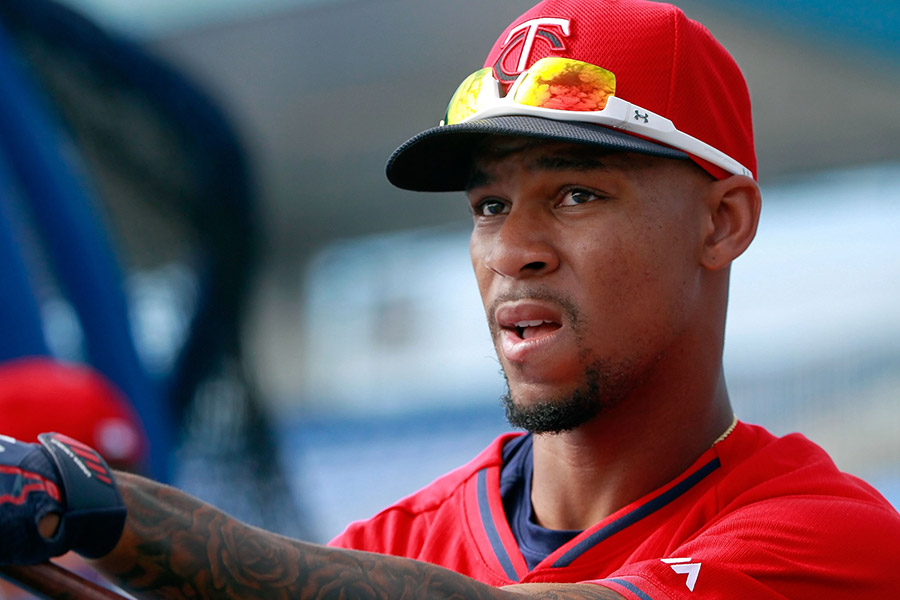 Understandably, there is a lot of excitement surrounding his arrival and surely produced a lot of hand-wringing prior to their debut. amount of expectation-tempering as Twins fans try to figure out what it means to have a player of Buxton's caliber on the roster While Buxton wasn't Baseball America's top prospect for 2015 (that prize went to the Cubs' Kris Bryant) he was their 2014 top prospect, which puts him in some pretty elite company, joining players like Bryce Harper, Jason Heyward, Joe Mauer, and Alex Rodriguez. All of these players excited their team's fans upon their arrival and surely produced lot of hand-wringing prior to their debut. So, here is what the last 20 years of Baseball America Top Prospects did in the very first major league game, along with the date of their debut (Pitcher stats have been omitted): 2015: Kris Bryant, April 17, 2015, 0-4, 3K 2014: Byron Buxton: Pending 2013: Jurickson Profar: September 2, 2012, 2-4, 2B, HR, R, RBI 2012: Bryce Harper: April 28, 2012, 1-3, 2B, RBI 2011: Bryce Harper: April 28, 2012, 1-3, 2B, RBI 2010: Jason Heyward: April 5, 2010, 2-5, HR, 2 R, 4 RBI, 2009: Matt Wieters: May 29, 2009, 0-4, K 2008: Jay Bruce: May 27, 2008, 3-3, 2B, 2 R, 2 RBI, 2 BB 2007: Daisuke Matsuzaka 2006: Delmon Young: August 29, 2006, 2-3, HR, 2 R, 2 RBI 2005: Joe Mauer: April 5, 2004, 2-3, 2 R, 2 BB 2004: Joe Mauer: April 5, 2004, 2-3, 2 R, 2 BB 2003: Mark Teixeira: April 1, 2003, 0-3, BB, K 2002: Josh Beckett 2001: Josh Hamilton: April 2, 2007, 0-1 (1-3, HR, R, RBI, 2BB in full debut on April 10) 2000: Rick Ankiel (P) 1999: J.D. Drew: September 2, 1998, 0-2, K (0-3, R, 2K, BB in first start on Sept. 13) 1998: Ben Grieve: September 3, 1997, 3-4, 3 2B, 2 R, 5 RBI, BB 1997: Andruw Jones: August 15, 1996, 1-5, R, RBI, 2K 1996: Andruw Jones: August 15, 1996, 1-5, R, RBI, 2K 1995: Alex Rodriguez: July 8, 1994, 0-3 The good news for Buxton is that, unless he becomes the first top prospect in the last 20 years to earn a Golden Sombrero on his debut, he's unlikely to have a worse coming out party than Bryant did in April. On the other end of the spectrum, he'll be chasing Ben Grieve and Jay Bruce for the best day, though Jurickson Profar isn't far behind in terms of productivity. If that isn't reason enough not to get too high or too low about what Buxton does in his first game, I'm not sure what is. One way Buxton could set his name in the stars is if he steals a base; since 1990, no BA top prospect has successfully stolen a base on his debut. No matter what he does, it's fairly clear that what happens when he does start has literally no effect on the rest of his career. Still, I don't think many Twins fans would say no to a duplicate of 2004 Joe Mauer.
 -
As you may have heard other places on the inter-net and quite possibly on this very website, the Twins' top prospect, Byron Buxton, has joined the team in Texas and the assumption is that he'll make his debut on Sunday. Understandably, there is a lot of excitement surrounding his arrival and not a mean amount of expectation-tempering from the other side as Twins fans try to figure out what it means to have a player of Buxton's caliber on the roster. While Buxton wasn't Baseball America's top prospect in baseball this year, that prize went to the Cubs' Kris Bryant, he was their 2014 top prospect, which puts him in some pretty elite company, joining players like Bryce Harper, Jason Heyward, Joe Mauer, and Alex Rodriguez. All of these players excited their team's fanbase upon their arrival and surely produced the same hand-wringing over what they were going to do for the team. So, here is what the last 20 years of Baseball America Top Prospects did in the very first major league game, along with the date of their debut (Pitcher stats have been omitted): 2015: Kris Bryant, April 17, 2015, 0-4, 3K 2014: Byron Buxton: Pending 2013: Jurickson Profar: September 2, 2012, 2-4, 2B, HR, R, RBI 2012: Bryce Harper: April 28, 2012, 1-3, 2B, RBI 2011: Bryce Harper: April 28, 2012, 1-3, 2B, RBI 2010: Jason Heyward: April 5, 2010, 2-5, HR, 2 R, 4 RBI, 2009: Matt Wieters: May 29, 2009, 0-4, K 2008: Jay Bruce: May 27, 2008, 3-3, 2B, 2 R, 2 RBI, 2 BB 2007: Daisuke Matsuzaka 2006: Delmon Young: August 29, 2006, 2-3, HR, 2 R, 2 RBI 2005: Joe Mauer: April 5, 2004, 2-3, 2 R, 2 BB 2004: Joe Mauer: April 5, 2004, 2-3, 2 R, 2 BB 2003: Mark Teixeira: April 1, 2003, 0-3, BB, K 2002: Josh Beckett 2001: Josh Hamilton: April 2, 2007, 0-1 (1-3, HR, R, RBI, 2BB in full debut on April 10) 2000: Rick Ankiel (P) 1999: J.D. Drew: September 2, 1998, 0-2, K (0-3, R, 2K, BB in first start on Sept. 13) 1998: Ben Grieve: September 3, 1997, 3-4, 3 2B, 2 R, 5 RBI, BB 1997: Andruw Jones: August 15, 1996, 1-5, R, RBI, 2K 1996: Andruw Jones: August 15, 1996, 1-5, R, RBI, 2K 1995: Alex Rodriguez: July 8, 1994, 0-3 The good news for Buxton is that, unless he becomes the first top prospect in the last 20 years to earn a Golden Sombrero on his debut, he's unlikely to have a worse coming out party than Bryant did in April. On the other end of the spectrum, he'll be chasing Ben Grieve and Jay Bruce for the best day, though Jurickson Profar isn't far behind in terms of productivity. If that isn't reason enough not to get too high or too low about what Buxton does in his first game, I'm not sure what is. One way Buxton could set his name in the stars is if he steals a base; since 1990, no BA top prospect has successfully stolen a base on his debut. No matter what he does, it's fairly clear that what happens when he does start has literally no effect on the rest of his career. Still, I don't think many Twins fans would say no to a duplicate of what Joe Mauer did back in 2004.

