



Seth Stohs
-
Posts
25,909 -
Joined
-
Last visited
-
Days Won
109
Content Type
Profiles
News
Minnesota Twins Videos
2026 Minnesota Twins Top Prospects Ranking
2022 Minnesota Twins Draft Picks
Minnesota Twins Free Agent & Trade Rumors, Notes, & Tidbits
Guides & Resources
2023 Minnesota Twins Draft Picks
The Minnesota Twins Players Project
2024 Minnesota Twins Draft Picks
2025 Minnesota Twins Draft Pick Tracker
2026 Minnesota Twins Draft Tracker: Picks & Bonuses
Forums
Blogs
Events
Store
Downloads
Gallery
Everything posted by Seth Stohs
-
 Anderson was traded before the deadline. In fact, I think it was announced with the additions.The reason was so that the Marlins could add him to their 40-man roster. The Twins could try to trade a non-added player. Let's use Jax as the example, and I think you may have answered your own question. Those guys can't be added to the 40-man now, so the acquiring team would then risk them being taken. It's the same reason that teams generally try to not announce their minor league signings until after the Rule 5, so they don't have to risk losing them. You may recall that one year the Twins signed RA Dickey to a minor league deal, then a week later the Mariners Rule 5d him. Likewise, a guy like Jax's value does go back up immediately after the Rule 5 draft, if he isn't selected because now the team has a year to determine if they would want to add him... but that is also true for the Twins.
- 44 replies
-
- 1
-

-
- luke raley
- gilberto celestino
- (and 3 more)
-
Well, and if there are people touting him as the next Gerrit Cole, they should ask for more.
- 21 replies
-
- 1
-
-
- gerrit cole
- jon gray
- (and 1 more)
-
I thought the same thing, but I was trying to be equivalent to what the Pirates got for Cole. That's not easy to do, but looking back, they probably didn't get enough for Cole, but at the time, it was a solid haul.
- 21 replies
-
- 1
-
-
- gerrit cole
- jon gray
- (and 1 more)
-
He made $2.925 million in 2019, his first arbitration season. MLB Trade Rumors projects him to make $5.6 million in 2020.
-
They can't be.
-
Absolutely... he and Griffin Jax are an interesting contrast in terms of how teams view the Rule 5 draft. Jaz is 90-92, solid secondary, etc. He got a little AAA time, so by age and experience, he's close. Rijo throws 93-96, is a few years younger, but has topped out at Low-A so far. So are teams interested in ready to contribute or higher ceiling and stash? Or both... or neither..???
- 44 replies
-
- 3
-
-
- luke raley
- gilberto celestino
- (and 3 more)
-
Yesterday, Nick wrote an article talking about how the Twins deserve creditfor acquiring Jake Odorizzi and working with him to find his best self in 2019. Today, I wanted to continue the “Finding the Next Gerrit Cole” theme by literally trying to find someone who could possibly provide the type of impact that Cole had on the Astros. Maybe there is one potential trade candidate out there who fits that mold.Twins fans (at least those who read Twins Daily) have known about Jon Gray and his pitching talents since before the Colorado Rockies made him the third overall pick in the 2013 MLB Draft. The Twins Geek wrote up a Draft Profile on the flame-thrower from Oklahoma. That year, Gray was taken after the Astros took Mark Appel and the Cubs selected Kris Bryant. One pick after the Rockies drafted Gray, the Twins used the fourth overall pick on Kohl Stewart. Gerrit Cole, of course, was the first overall pick in the 2011 MLB Draft by the Pittsburgh Pirates out of UCLA. Cole is listed at 6-foot-4. Gray is listed at 6-foot-4. Cole is listed at 225 pounds. Gray is listed at 227 pounds. Of course, height and weight are important in scouting, but in this analysis, it means nothing. There are dozens of MLB (and minor league) pitchers that are 6-foot-4 and 225 pounds or so. I thought it would be interesting to compare more to see how similar the two might be. To do so, I looked at Gerrit Cole in 2017. He was 26 years old and had two more years of arbitration remaining. In 2019, Jon Gray was 27 years old, and as we look forward, he has two more years before he can become a free agent. So let’s take a look at how Gerrit Cole performed for the Pirates in 2017 and compare it to how Jon Gray pitched for the Rockies in 2019. And hey, just for fun, let’s throw Cole’s 2019 numbers in there too. What does it show us? Obviously we know that Win-Loss record doesn’t tell us anything. Gray’s ERA was better, but Cole held a slight advantage in xFIP (Fielding Independent Pitching). Cole had the better WHIP. It might surprise people to see that Gray actually struck out more batters, though it’s statistically close enough, especially when strikeouts continue to increase across the league. Cole had better control. The biggest difference is that Cole topped 200 innings in 2017 while Gray pitched just 150 innings in 2019. Gray went on the injured list in mid-August with a fractured left foot. He had surgery and should be ready in advance of spring training. He had a similar foot/ankle injury in 2017 that cost him two-and-a-half months. Gray gets more ground balls, though I can’t help but wonder if that’s due to how he chooses to pitch in Colorado.The two had very similar strikeout rates. Again, comparing those numbers to what Cole became in 2019 is more just fun than anything else, something to dream on. Some will say that Gray isn’t as good as Cole was in 2017. I think that the numbers above show that they are more similar statistically than we may have even thought. But I think it’s more important to look at how they pitch to see whether or not they are similar. Is their stuff comparable? Here are some numbers, again comparing Gray in 2019 with Cole in 2017. And, of course, I needed to add Cole in 2019 to the chart for fun, but also for a point. (SETH CORRECTION: Jon Gray threw 33.5% sliders, not 13.5% Sorry if that created confusion.) I happen to think this chart is really interesting. Again, comparing Gray in 2019 with Cole in 2017, there are a lot of similarities. They both had an average fastball of 96 mph. They both throw 88 mph sliders. Gray’s curveball came in just a little slower, and so did his changeup. Cole threw more fastballs. Gray threw a lot of sliders and didn’t throw many changeups. Cole gave up less contact and got a higher percentage of swing-and-misses on strikes. It all speaks to his stuff being right on par with Garret Cole’s in 2017. The Big Question In my mind, the big question is - and should be with any pitcher the Twins consider with trades or free agency: Do the Twins pitching coaches, coordinators and evaluators think that Jon Gray can take it a step up from his 2019 numbers the same way that Cole’s performance jumped from 2017 to 2019? Cole added one mph on his fastball and on his slider. He did so while throwing a fewer fastballs and changeups and a few more sliders and curveballs. Can Jon Gray add a tick or two to his velocity? Can his pitch mix be altered in such a way to reduce his contact rate and improve his swing-and-miss stuff? Ultimately that’s what the Twins brass needs to consider. What Might it Take? If they do consider Gray to be a guy that could take a step forward in performance and possibly be an elite starting pitcher, well, then they need to figure out what they are willing to give up to acquire him from the Rockies. So again, let’s look at Gerrit Cole for a comparison. The Houston Astros acquired Gerrit Cole from the Pittsburgh Pirates in exchange for four players: RHP Michael Feliz - He was 24 years old and spent two-plus seasons with the Astros before the trade. He had a 5.13 ERA over that time period before the deal.OF Jason Martin - He was a 22-year-old at the time of the deal. He split 2017 between High-A and AA and hit 35 doubles and 18 home runs that season.1B/3B Colin Moran - He was 25 and had been a high draft pick. He was a Top 100 prospect in previous years but no longer at the time of the deal.RHP Joe Musgrave - He was a 24-year-old, a first-round pick in 2011. He spent time as a part-time starter with the Astros in 2016 and 2017.So what might a similar deal look like for the Twins.Obviously this is a hypothetical, but I think it would take something similar to the below. I think that the package should be similar, but still a little less than what was required to acquire Cole.RHP Fernando Romero - Romero is currently 24-years-old and has spent parts of 2018 and 2019 in the big leagues. While his numbers in 2019, his first year as a bullpen arm, didn’t do great, his potential is still high.IF Travis Blankenhorn - He was just added to the 40-man roster, but like Martin, he split 2019 between High-A and AA and hit 19 home runs despite missing a bit more than a month with a broken finger.OF/1B - Brent Rooker - Can you imagine what Brent Rooker could do to baseballs in the Mile High City? Rooker had been in the Top 100 prospects last year but injuries cost him time in 2019. But his power is legit.RHP Griffin Jax - Now, when I put this together, I wasn’t sure if Jax would be added to the 40-man roster. The Denver (area) native wasn’t added to the 40-man roster, so he’s less likely to be tradable until after the Rule 5 draft. But there are any number of similar pitchers in the organization that the Rockies might have an interest in as well. If I were to keep the theme of Denver-area people, Bailey Ober might be a candidate. Or, might it take a pitcher with some big-league service time like a Devin Smeltzer or even Lewis Thorpe to be a sufficient final piece?Let’s be honest. There’s no way to know what the Rockies would ask for. Maybe instead of four similar prospects, they may ask for one big prospect with one lesser prospect, or maybe the fourth player in this deal could be two other players. SUMMARY The Twins - and every team in baseball - want to find the next Gerrit Cole.Rockies ace Jon Gray has a lot of similarities to Gerrit Cole pre-trade, both statistically and in terms of stuff.The Twins - and every team in baseball - will need to attempt to evaluate if they have ways that could make Gray take the next step toward becoming an elite starter.Determine how much your team is willing to trade in exchange for Jon Gray (and then go-ahead and try to convince the Rockies that it is enough).Hope! Hey, just because there are similarities between pitchers (age, size, stats and stuff) does not necessarily mean that they will have the same success. There is a lot of luck involved. But Derek Falvey has a reputation for developing pitchers. Wes Johnson got a lot of credit for some of the Twins pitching successes and improvements in 2019.If nothing else, it’s fun to think about. Finding the next Gerrit Cole is half the battle. Helping him develop into that pitcher is another thing. Maybe there are red flags, concerns about Jon Gray specifically. Maybe there are other issues that the Twins need to factor and consider. We can’t know it all, but as fans, we’ve been waiting for a true Ace since Johan Santana. Click here to view the article
- 21 replies
-
- 4
-
-
- gerrit cole
- jon gray
- (and 1 more)
-
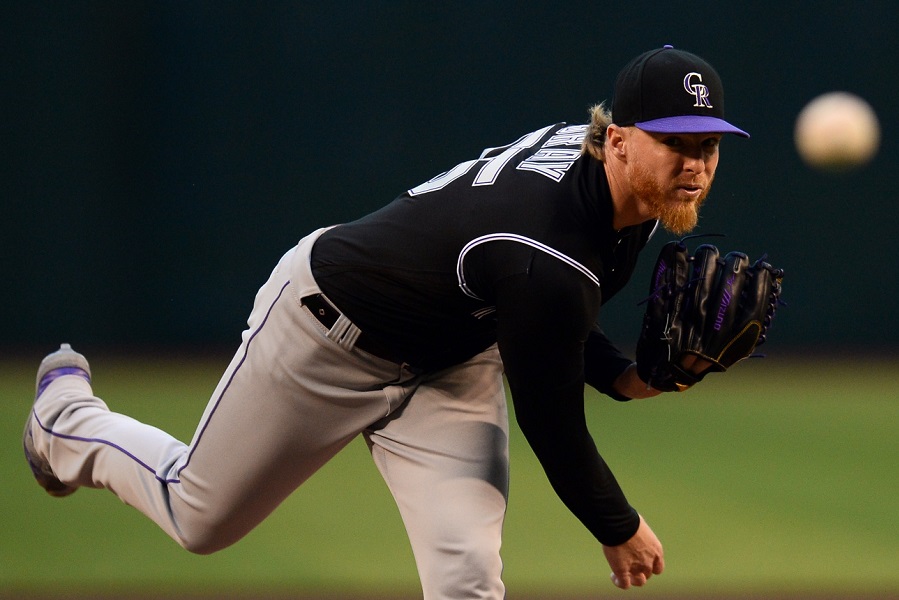 Twins fans (at least those who read Twins Daily) have known about Jon Gray and his pitching talents since before the Colorado Rockies made him the third overall pick in the 2013 MLB Draft. The Twins Geek wrote up a Draft Profile on the flame-thrower from Oklahoma. That year, Gray was taken after the Astros took Mark Appel and the Cubs selected Kris Bryant. One pick after the Rockies drafted Gray, the Twins used the fourth overall pick on Kohl Stewart. Gerrit Cole, of course, was the first overall pick in the 2011 MLB Draft by the Pittsburgh Pirates out of UCLA. Cole is listed at 6-foot-4. Gray is listed at 6-foot-4. Cole is listed at 225 pounds. Gray is listed at 227 pounds. Of course, height and weight are important in scouting, but in this analysis, it means nothing. There are dozens of MLB (and minor league) pitchers that are 6-foot-4 and 225 pounds or so. I thought it would be interesting to compare more to see how similar the two might be. To do so, I looked at Gerrit Cole in 2017. He was 26 years old and had two more years of arbitration remaining. In 2019, Jon Gray was 27 years old, and as we look forward, he has two more years before he can become a free agent. So let’s take a look at how Gerrit Cole performed for the Pirates in 2017 and compare it to how Jon Gray pitched for the Rockies in 2019. And hey, just for fun, let’s throw Cole’s 2019 numbers in there too. What does it show us? Obviously we know that Win-Loss record doesn’t tell us anything. Gray’s ERA was better, but Cole held a slight advantage in xFIP (Fielding Independent Pitching). Cole had the better WHIP. It might surprise people to see that Gray actually struck out more batters, though it’s statistically close enough, especially when strikeouts continue to increase across the league. Cole had better control. The biggest difference is that Cole topped 200 innings in 2017 while Gray pitched just 150 innings in 2019. Gray went on the injured list in mid-August with a fractured left foot. He had surgery and should be ready in advance of spring training. He had a similar foot/ankle injury in 2017 that cost him two-and-a-half months. Gray gets more ground balls, though I can’t help but wonder if that’s due to how he chooses to pitch in Colorado.The two had very similar strikeout rates. Again, comparing those numbers to what Cole became in 2019 is more just fun than anything else, something to dream on. Some will say that Gray isn’t as good as Cole was in 2017. I think that the numbers above show that they are more similar statistically than we may have even thought. But I think it’s more important to look at how they pitch to see whether or not they are similar. Is their stuff comparable? Here are some numbers, again comparing Gray in 2019 with Cole in 2017. And, of course, I needed to add Cole in 2019 to the chart for fun, but also for a point. (SETH CORRECTION: Jon Gray threw 33.5% sliders, not 13.5% Sorry if that created confusion.) I happen to think this chart is really interesting. Again, comparing Gray in 2019 with Cole in 2017, there are a lot of similarities. They both had an average fastball of 96 mph. They both throw 88 mph sliders. Gray’s curveball came in just a little slower, and so did his changeup. Cole threw more fastballs. Gray threw a lot of sliders and didn’t throw many changeups. Cole gave up less contact and got a higher percentage of swing-and-misses on strikes. It all speaks to his stuff being right on par with Garret Cole’s in 2017. The Big Question In my mind, the big question is - and should be with any pitcher the Twins consider with trades or free agency: Do the Twins pitching coaches, coordinators and evaluators think that Jon Gray can take it a step up from his 2019 numbers the same way that Cole’s performance jumped from 2017 to 2019? Cole added one mph on his fastball and on his slider. He did so while throwing a fewer fastballs and changeups and a few more sliders and curveballs. Can Jon Gray add a tick or two to his velocity? Can his pitch mix be altered in such a way to reduce his contact rate and improve his swing-and-miss stuff? Ultimately that’s what the Twins brass needs to consider. What Might it Take? If they do consider Gray to be a guy that could take a step forward in performance and possibly be an elite starting pitcher, well, then they need to figure out what they are willing to give up to acquire him from the Rockies. So again, let’s look at Gerrit Cole for a comparison. The Houston Astros acquired Gerrit Cole from the Pittsburgh Pirates in exchange for four players: RHP Michael Feliz - He was 24 years old and spent two-plus seasons with the Astros before the trade. He had a 5.13 ERA over that time period before the deal. OF Jason Martin - He was a 22-year-old at the time of the deal. He split 2017 between High-A and AA and hit 35 doubles and 18 home runs that season. 1B/3B Colin Moran - He was 25 and had been a high draft pick. He was a Top 100 prospect in previous years but no longer at the time of the deal. RHP Joe Musgrave - He was a 24-year-old, a first-round pick in 2011. He spent time as a part-time starter with the Astros in 2016 and 2017. So what might a similar deal look like for the Twins.Obviously this is a hypothetical, but I think it would take something similar to the below. I think that the package should be similar, but still a little less than what was required to acquire Cole. RHP Fernando Romero - Romero is currently 24-years-old and has spent parts of 2018 and 2019 in the big leagues. While his numbers in 2019, his first year as a bullpen arm, didn’t do great, his potential is still high. IF Travis Blankenhorn - He was just added to the 40-man roster, but like Martin, he split 2019 between High-A and AA and hit 19 home runs despite missing a bit more than a month with a broken finger. OF/1B - Brent Rooker - Can you imagine what Brent Rooker could do to baseballs in the Mile High City? Rooker had been in the Top 100 prospects last year but injuries cost him time in 2019. But his power is legit. RHP Griffin Jax - Now, when I put this together, I wasn’t sure if Jax would be added to the 40-man roster. The Denver (area) native wasn’t added to the 40-man roster, so he’s less likely to be tradable until after the Rule 5 draft. But there are any number of similar pitchers in the organization that the Rockies might have an interest in as well. If I were to keep the theme of Denver-area people, Bailey Ober might be a candidate. Or, might it take a pitcher with some big-league service time like a Devin Smeltzer or even Lewis Thorpe to be a sufficient final piece? Let’s be honest. There’s no way to know what the Rockies would ask for. Maybe instead of four similar prospects, they may ask for one big prospect with one lesser prospect, or maybe the fourth player in this deal could be two other players. SUMMARY The Twins - and every team in baseball - want to find the next Gerrit Cole. Rockies ace Jon Gray has a lot of similarities to Gerrit Cole pre-trade, both statistically and in terms of stuff. The Twins - and every team in baseball - will need to attempt to evaluate if they have ways that could make Gray take the next step toward becoming an elite starter. Determine how much your team is willing to trade in exchange for Jon Gray (and then go-ahead and try to convince the Rockies that it is enough). Hope! Hey, just because there are similarities between pitchers (age, size, stats and stuff) does not necessarily mean that they will have the same success. There is a lot of luck involved. But Derek Falvey has a reputation for developing pitchers. Wes Johnson got a lot of credit for some of the Twins pitching successes and improvements in 2019. If nothing else, it’s fun to think about. Finding the next Gerrit Cole is half the battle. Helping him develop into that pitcher is another thing. Maybe there are red flags, concerns about Jon Gray specifically. Maybe there are other issues that the Twins need to factor and consider. We can’t know it all, but as fans, we’ve been waiting for a true Ace since Johan Santana.
-
Kepler was added after the 2013 season, and he didn't debut until the final weeks of 2015. 40-man roster spots aren't just for guys who can contribute next year. It's also for those types who can be big-time impact players in the next couple of seasons. Kepler and Polanco were both added after 2013 in Cedar Rapids... Polanco wasn't a regular until 2016. Of course, a few years before that, they added Deibinson Romero and Estarlin de los Santos after their 2008 season in Beloit. Doesn't always work out.
- 44 replies
-
- 10
-
-
- luke raley
- gilberto celestino
- (and 3 more)
-
Yup, Raley can play in the big leagues now, and he even played a bunch of CF in the spring and in the season. He's much more well-rounded than Rooker. Blankenhorn is just such a great athlete, and he started figuring things out more in 2019. If he can keep that up, he has a chance to be really good... and his versatility will help too.
- 44 replies
-
- 9
-
-
- luke raley
- gilberto celestino
- (and 3 more)
-
Assume you're talking about Luis Rijo. He was hitting 95-96 in 2019, so that's pretty good for a 20-21 year old.
- 44 replies
-
- 6
-
-
- luke raley
- gilberto celestino
- (and 3 more)
-
They may not be drafted, but not because they finished at Low A... Jax doesn't have much upside, but he's probably fairly close to being big-league ready. Ceiling probably a #4 starter...
- 44 replies
-
- 1
-
-
- luke raley
- gilberto celestino
- (and 3 more)
-
The Minnesota Twins have announced that right-handed pitchers Jhoan Duran and Dakota Chalmers, infielder Travis Blankenhorn and outfielders Luke Raley and Gilberto Celestino have been added to the team's 40-man roster. The Twins roster now sits at 37 players.Jhoan Duran was the obvious choice. He split the 2019 season between Ft. Myers and Pensacola. He is touted for his fastball which has hit triple digits on multiple occasions. He is viewed as a starting pitcher. The Twins acquired him in July 2018 from the Diamondbacks in the Eduardo Escobar trade. Dakota Chalmers came to the Twins in August 2018 from the A's in exchange for Fernando Rodney. Chalmers had recently undergone Tommy John surgery, but he is touted for having a big fastball. He also has the makings of plus change up and curveball. He returned to action in the second half of 2019 for the Ft. Myers Miracle. When their season ended, he and Jordan Balazovic were promoted to Pensacola for their playoff run. Gilberto Celestino joined the Twins in July 2018, with Jorge Alcala who was added to the roster in September, in the Ryan Pressly trade. After a slow start, he was on fire his final two-plus months in Cedar Rapids. He ended the season with a couple of weeks in Ft. Myers where he continued to hit. He also plays an elite caliber centerfield. Luke Raley came to the Twins with Devin Smeltzer in the July 2018 Brian Dozier trade from the Dodgers. He missed most of the 2019 season but returned to play in the Arizona Fall League. Travis Blankenhorn was the Twins third-round pick in 2015 out of high school in Pennsylvania. He spent about two weeks in Ft. Myers this year before hitting 18 homers for Pensacola. The biggest name left off of the roster is Wander Javier. The Twins signed the shortstop from the Dominican Republic in 2015 for a $4 million signing bonus. Griffin Jax and Luis Rijo are two starting pitchers who could potentially be lost in the Rule 5 draft. Share your thoughts on the Twins decisions. Here is our listing of players who were eligible to be protected. Click here to view the article
- 44 replies
-
- 5
-
-
- luke raley
- gilberto celestino
- (and 3 more)
-
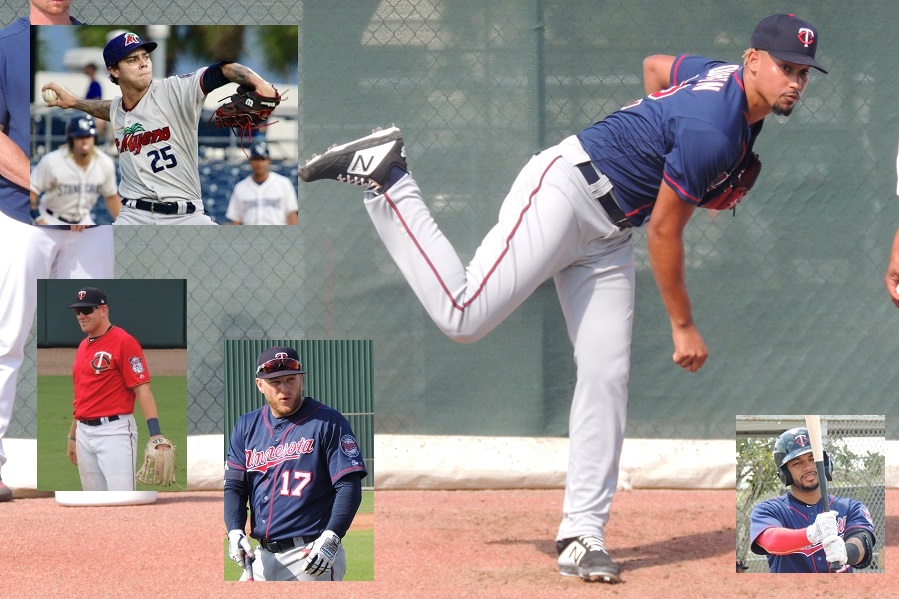 Jhoan Duran was the obvious choice. He split the 2019 season between Ft. Myers and Pensacola. He is touted for his fastball which has hit triple digits on multiple occasions. He is viewed as a starting pitcher. The Twins acquired him in July 2018 from the Diamondbacks in the Eduardo Escobar trade. Dakota Chalmers came to the Twins in August 2018 from the A's in exchange for Fernando Rodney. Chalmers had recently undergone Tommy John surgery, but he is touted for having a big fastball. He also has the makings of plus change up and curveball. He returned to action in the second half of 2019 for the Ft. Myers Miracle. When their season ended, he and Jordan Balazovic were promoted to Pensacola for their playoff run. Gilberto Celestino joined the Twins in July 2018, with Jorge Alcala who was added to the roster in September, in the Ryan Pressly trade. After a slow start, he was on fire his final two-plus months in Cedar Rapids. He ended the season with a couple of weeks in Ft. Myers where he continued to hit. He also plays an elite caliber centerfield. Luke Raley came to the Twins with Devin Smeltzer in the July 2018 Brian Dozier trade from the Dodgers. He missed most of the 2019 season but returned to play in the Arizona Fall League. Travis Blankenhorn was the Twins third-round pick in 2015 out of high school in Pennsylvania. He spent about two weeks in Ft. Myers this year before hitting 18 homers for Pensacola. The biggest name left off of the roster is Wander Javier. The Twins signed the shortstop from the Dominican Republic in 2015 for a $4 million signing bonus. Griffin Jax and Luis Rijo are two starting pitchers who could potentially be lost in the Rule 5 draft. Share your thoughts on the Twins decisions. Here is our listing of players who were eligible to be protected.
-
Was a bad example. Didn't want to pick the name of anyone who they might actually consider dropping later if needed.
- 74 replies
-
- 1
-
-
- jhoan duran
- dakota chalmers
- (and 3 more)
-
Cave was a bad example... but I used him because I'd be shocked if he was to be DFAd. But there are other guys on the 40 that could be removed still if they don't want to risk losing an extra guy or two and still plan to add more free agents too. Teams leave guys that they can drop later if need be.
-
Yes, but there are still others on the 40-man that they could still drop if they decide to add more players... for instance, if they need another spot, maybe Cave gets DFAd (they have a few guys who could fit into that category, including Wisler and such).
- 74 replies
-
- 5
-
-
- jhoan duran
- dakota chalmers
- (and 3 more)
-
Twins top 30 by Prospects Live
Seth Stohs replied to biggentleben's topic in Twins Minor League Talk
As Steve Lien reported in during the AFL, Rortvedt had knee surgery, so hopefully he comes back from that strong. He did have a solid first half... But, the Twins LOVE Jeffers... -
Re-posted at the top as the Twins have until Wednesday, November 20th at 7:00 p.m. to make their 40-man roster adds.
-
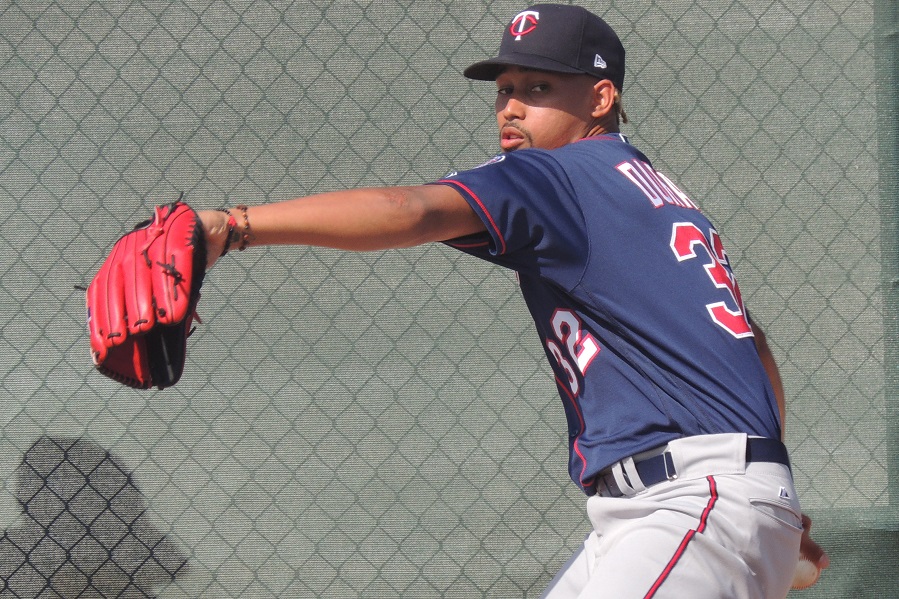 With Stephen Gonsalves, Kohl Stewart and Martin Perez removed from the Twins 40-man roster on Monday, as well as six Twins players being free agents, the Twins 40-man roster is currently at 31 players. Here’s the quick version: Pitchers (16): Jorge Alcala, Jose Berrios, Randy Dobnak, Tyler Duffey, Brusdar Graterol, Ryne Harper, Trevor Hildenberger, Zack Littell, Trevor May, Sean Poppen, Taylor Rogers, Fernando Romero, Devin Smeltzer, Cody Stashak, Lewis Thorpe, Matt Wisler. Catchers (2): Willians Astudillo, Mitch Garver Infielders (7): Ehire Adrianza, Luis Arraez, CJ Cron, Marwin Gonzalez, Nick Gordon, Jorge Polanco, Miguel Sano Outfielders: (5) Byron Buxton, Jake Cave, Max Kepler, Eddie Rosario, LaMonte Wade DH(1): Nelson Cruz Recall that the players who are added to the 40-man roster can’t be DFA'd until spring training, so the team will likely not want to fill up their roster now. But as you can see, there are still players on this list that need to be offered arbitration (or not) and there are several players who could be DFA'd for when the team signs free agents. ---------------------------------- Last year, the Twins added three players to their 40-man roster. The “givens” at that time were Nick Gordon and LaMonte Wade. We included Luis Arraez as the first “on the bubble” name. The third “on the bubble” name mentioned here a year ago was RH RP Nick Anderson who was traded to the Marlins and pitched tremendously for the Marlins and the Rays as a rookie in 2019. ---------------------------------- So, let’s get to the players that the team will consider adding to their 40-man roster. As a reminder, here are some of the criteria for who is eligible for the Rule 5 draft if not protected. Here is this year’s criteria: Players who signed when they were 18 or younger in 2015 (during the minor league season). Players who signed when they were 19 or older in 2016. Players who were eligible in previous seasons are also eligible again. Players drafted or signed during the 2013 season became free agents after the World Series was complete. That includes Johan Quezada and Jose Martinez. That is why Kohl Stewart, who went unclaimed on Monday, was able to become a free agent. If the Twins signed them (or other minor league free agents) before the Rule 5 draft, they would be eligible for the Rule 5 draft. But back to the players needing to be added or risk losing to the Rule 5 draft, I’ll break them into a few categories. The Givens are players that I think have to be added or there is a high likelihood that they will be selected by another team. The next group is a group of players that I think will probably be added, though not quite as obviously. The final group includes players that I would consider On The Bubble. It will be interesting to see which of these guys are added later this month. How many spots will be available on the team’s 40-man roster at that time? The Givens Several players that would have been Givens were already added to the 40-man roster and called up late in the season. In fact, there were several guys who may have been borderline who were added already. For instance, Brusdar Graterol and Jorge Alcala were going to be added. No question. Here are a couple more. RHP Jhoan Duran - He came to the Twins in July 2018 from the Diamondbacks in the Eduardo Escobar trade. Duran throws hard. He hit triple-digits with a fastball several times in many of his starts. He went just 2-9 despite a 3.23 ERA in 16 games (15 starts) for the Miracle. He had 95 strikeouts in 78 innings.He moved up to AA Pensacola where he went 3-3 with a 4.86 ERA in seven starts. He struck out 41 batters in 37 innings. The 21-year-old stands 6-5 and has the potential for a starting pitcher’s mix. RHP Dakota Chalmers - Chalmers was a third-round pick of the Oakland A’s in 2015 out of high school in Georgia. He throws hard, but he has often struggled with control. He also fought injury and had Tommy John surgery early in 2018. The Twins acquired him in August in the Fernando Rodney trade. He returned to the mound in the second half of the 2019 season. After rehabbing in the GCL, the 23-year-old finished the regular season in Ft. Myers with the Miracle. He pitched for the Blue Wahoos in the playoffs and then headed to the Arizona Fall League to get more innings. He has a mid-90s fastball and good spin on his curveball. He also throws a changeup that is good when on. The Probables 2B/3B Travis Blankenhorn - The 23-year-old struggled in 2018 in Ft. Myers, as many do in the Florida State League, so he began 2019 with the Miracle. After just 15 games, he was promoted to AA Pensacola. He took off from there. In 93 games with the Blue Wahoos, he hit .278 with 18 doubles and 18 home runs. He was the Twins third-round pick in 2015 out of high school in Pennsylvania. He is one of the best athletes in the organization and has power and speed. OF Gilberto Celestino - The same year Javier signed with the Twins, the Astros signed Gilberto Celestino to a $2.25 million signing bonus. He came to the Twins in 2018 in the Ryan Pressly trade (with Jorge Alcala). He began 2019 by really struggling in Cedar Rapids, but he was on fire the final three months of the season and ended the year with the Miracle. And there, in 30 at-bats, he hit .300/.344/.433 (.767) OF Luke Raley - Raley was the Dodgers seventh-round pick in 2016 out of Division 2 Lake Erie College. He played well, and in July 2018, he came to the Twins with Devin Smeltzer in the Brian Dozier trade. He started 2019 in Rochester and was playing well when he hurt his ankle and needed surgery. It ended his season though he did play in the Arizona Fall League. He has power, and can play all three outfield positions, though center field is a stretch. On the Bubble RHP Luis Rijo - He came to the Twins from the Yankees in the July 2018 Lance Lynn trade. In 2018 in Cedar Rapids, he impressed by often hitting 95 and 96 mph with his fastball. He went 5-8 with a 2.86 ERA over 107 innings pitched. If he had spent time in Ft. Myers, he would probably be a Given, but could a team stash him for the full 2019 season? SS Wander Javier - When you sign an amateur to a $4 million signing bonus, you’d like to think that this decision would be easy, and maybe it is. But Javier has unfortunately missed nearly two seasons because of injury (most of 2016 in DSL and all of 2018). His 2019 started late and in 80 games, he hit just .177 with nine doubles and 11 home runs. He also had 17 errors. So, could he play in the big leagues today? Probably not. But he has as much talent as anyone in the organization, so a team might be willing to stash the 20-year-old on their big league roster for his potential. RHP Griffin Jax - The Twins third-round pick in 2016 out of the Air Force Academy. He signed and while he had commitments to the military, he pitched each summer. He has been able to pitch consistently since early in the 2018 season. He spent most of the 2019 season in Double-A Pensacola but made a couple of starts at Triple-A Rochester too. In 23 starts, he went a combined 5-7 with a 2.90 ERA. In 127 1/3 innings, he walked just 27 and struck out 94 (6.6 K/9). The Next This is a group that contains some intriguing names. While they aren’t obvious choices, there could be a team that likes them enough to take a shot with a Rule 5 pick. 1B Zander Wiel - The 26-year-old hit .254 with 40 doubles, five triples and 24 RBI at AAA Rochester in 2019 while performing adequately at first base. IF/OF Trey Cabbage - The 22-year-old was the Twins 4th round pick in 2015 out of high school in Tennessee. He is incredibly strong and hit a combined 15 homers in 2019 between Cedar Rapids and Ft. Myers. LHP Sam Clay - Fourth round pick in 2014 from Georgia Tech, Clay reached AAA in 2019. In 123 2/3 innings above High A, he has not given up a home run. In 69 1/3 innings in 2019 (2/3 of the innings in AA), he walked 28 and struck out 72 batters. RHP Moises Gomez - The 22-year-old Venezuelan posted a 1-4 record with 10 saves and a 2.91 ERA this season between Cedar Rapids and Ft. Myers. He also struck out 15 batters in 11 innings in the Arizona Fall League (we won’t mention the nine walks). RHP Jake Reed - We have brought him up as a Must-Add each of the last few seasons. He hasn’t been added, and he hasn’t been selected. Now 27, he is coming off of a 2019 season in which he posted a 5.76 ERA in Rochester (though he struck out 92 batters in 75 innings). RHP Tom Hackimer - The side-winding 25-year-old was the Twins 4th round pick in 2016 from St. John's. When healthy, he has been very productive. In 56 2/3 innings in 2019, he struck out 75 batters. The Rest Here is a list of other players who are eligible for the Rule 5 draft in the Twins organization. LHP Alex Robinson RHP Miguel De Jesus LHP Lachlan Wells RHP Yancarlos Baez RHP Melvi Acosta RHP Adam Bray RHP Andro Cutura LHP Zach Featherstone RHP Randy LeBlanc RHP Hector Lujan RHP Andriu Marin RHP Ryan Mason LHP Jovani Moran RHP Alex Schick RHP Carlos Suniaga LHP Andrew Vasquez LHP Tyler Watson RHP Tyler Wells IF Joe Cronin SS Yeltsin Encarnacion C Caleb Hamilton 3B Brian Schales OF Aaron Whitefield OF Malique Ziegler In the comments below, discuss my ranking and rank them by how you would protect them. We saw in 2019, and in 2018 too, that the Twins front office will make moves and keep that Rochester Connection quite active, so being on the 40-man roster is a big deal, but we have also seen that it can be altered frequently throughout a season. So, who do you think will be added? Does the fact that the Twins 40-man roster is currently at just 31 and there are others who could be DFAd still make you think they will add as many as eight players in two weeks?
-
2019/2020 Twins Minor League Coaching Changes
Seth Stohs replied to Seth Stohs's topic in Twins Minor League Talk
Twins grab a minor league hitting coach from Notre Dame. -
What do we think Twins payroll REALLY will be?
Seth Stohs replied to John Bonnes's topic in Minnesota Twins Talk
https://www.theringer.com/mlb/2018/2/21/17035624/mlb-revenue-sharing-owners-players-free-agency-rob-manfred -
Front Page: RIP Ryan Costello (1996-2019)
Seth Stohs replied to Seth Stohs's topic in Twins Daily Front Page News
If you are so inclined, there has been a Go Fund Me set up to help the family with arrangements. https://www.gofundme.com/f/the-family-of-ryan-costello?utm_source=twitter&utm_medium=social&utm_campaign=m_pd+share-sheet -
We are deeply saddened to learn that Minnesota Twins minor leaguer Ryan Costello passed away in New Zealand. Early reports indicate that he died of "natural causes" at the age of 23.The Twins family learned of a devastating loss late on Sunday night or early Monday morning. Ryan Costello, who split the 2019 season between the Ft. Myers Miracle and Pensacola Blue Wahoos, passed away in New Zealand. Costello arrived in New Zealand about a week ago. He was set to play for the Auckland Tuataras of the Australian Baseball League. He was drafted in the 31st round of the 2017 draft by the Seattle Mariners out of Central Connecticut State University in New Britain. He came to the Twins in the July 2018 trade that sent Zack Duke to the Mariners. He had been playing for former Twins infielder Denny Hocking with the Low A Clinton LumberKings. He joined the Ft. Myers Miracle and his big home run helped the Miracle to the Florida State League championship. He split the 2019 season between the Miracle and Blue Wahoos. With the Miracle, he hit .213/.337/.375 (.712) with 11 doubles and eight home runs in 68 games. In 40 games with Pensacola, he hit .240/.353/.473 (.826) with five doubles and seven home runs. News of his death started arriving on social media around midnight overnight. Last offseason, I chatted with Costello for this Get to Know 'Em story on Costello. The Minnesota Twins released a statement on Monday morning. Nick English, the owner of Munger English Sports Management (Costello's agents), provided the following statement: We extend out deepest condolences to the Costello family and friends and to all those in the Twins organization. Click here to view the article
-
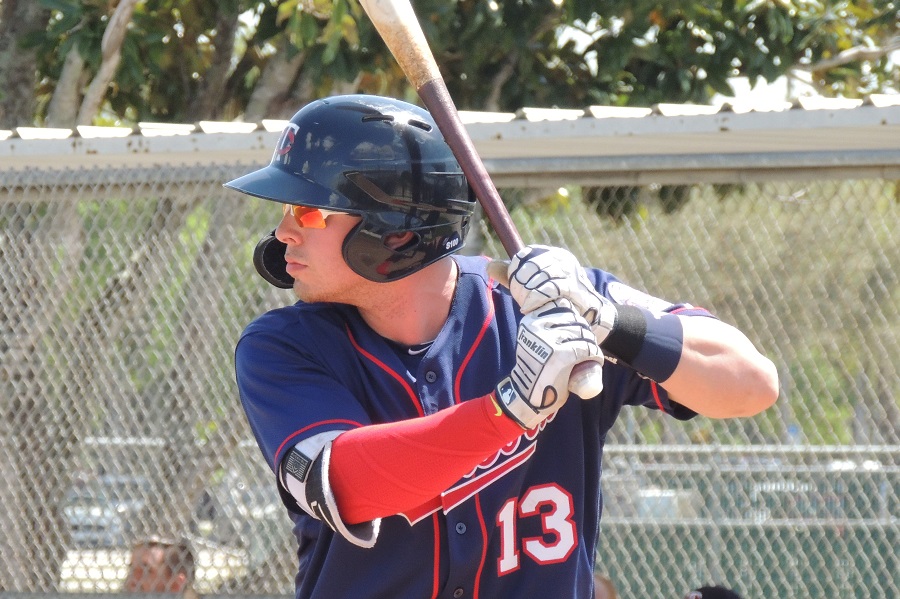 The Twins family learned of a devastating loss late on Sunday night or early Monday morning. Ryan Costello, who split the 2019 season between the Ft. Myers Miracle and Pensacola Blue Wahoos, passed away in New Zealand. Costello arrived in New Zealand about a week ago. He was set to play for the Auckland Tuataras of the Australian Baseball League. He was drafted in the 31st round of the 2017 draft by the Seattle Mariners out of Central Connecticut State University in New Britain. He came to the Twins in the July 2018 trade that sent Zack Duke to the Mariners. He had been playing for former Twins infielder Denny Hocking with the Low A Clinton LumberKings. He joined the Ft. Myers Miracle and his big home run helped the Miracle to the Florida State League championship. He split the 2019 season between the Miracle and Blue Wahoos. With the Miracle, he hit .213/.337/.375 (.712) with 11 doubles and eight home runs in 68 games. In 40 games with Pensacola, he hit .240/.353/.473 (.826) with five doubles and seven home runs. News of his death started arriving on social media around midnight overnight. https://twitter.com/ABL/status/1196305660985724929 Teammates and those who knew him took to Instagram and other forms of social media to express their sadness. He was a very popular teammate. https://twitter.com/MarshallKelner/status/1196360547203272704 Last offseason, I chatted with Costello for this Get to Know 'Em story on Costello. The Minnesota Twins released a statement on Monday morning. Nick English, the owner of Munger English Sports Management (Costello's agents), provided the following statement: We extend out deepest condolences to the Costello family and friends and to all those in the Twins organization.
